Wednesday, March 9, 2016

Purple invertebrates in the Abyss!

Another week and another bunch of deep-sea Okeanos dives in the French Frigate/Hawaiian Islands region!

One thing I noticed while reviewing the recent dives and those from last year was just how much COLOR you see in the deep-sea.. black, white, ORANGE... and purple!

Purple is of course, the color of kings! In Chinese painting, purple represents the harmony of the universe because it mixes red and blue. There's a whole bunch of meaning which you can find on Wikipedia..

Functional explanations for animals with black, white (such as this Henricia) or transparent/translucent body walls seem to be explained pretty readily by light-related/lack of pigment type explanations.
And even the bright orange colors in species are considered adaptive.. as orange/red does not reach into the depths, rending animals these bright colors effectively black.
It is interesting then, what about those animals that AREN'T any of these colors??

Why are SO MANY deep-sea animals purple?  

I'm not sure if I'm missing some biophysical explanation.. whether this color has some adaptive significance? Or perhaps simply results in some modification of pigments due to some physiological/defensive/efficiency?? 

Purple (or at least a bold blue) seems to be present in several different phyla of animals in the Hawaiian deeps as observed by the Okeanos Explorer ROV..  Note: These are all pretty deep. 1000-4000 m or thereabouts..

How many purple invertebrates are there??

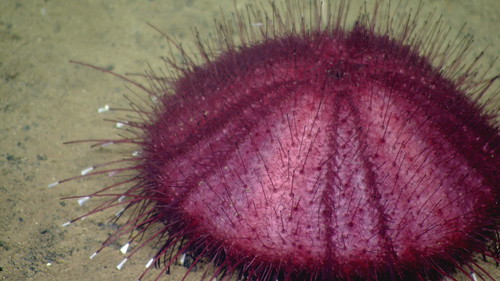
1. There's this big echinothuriid urchin, Tromikosoma As discussed last week, these walk around on the deep-sea floor with spines modified into walking legs.

The shallow water relatives of these urchins are VERY poisonous and brilliantly colorful! As presented here, a few years ago.


Curiously, another purple echinoderm is this feather star (crinoid), Sarametra triserialis (Zenometridae) as ID by Chuck Messing. 

This "slime star", Hymenaster sp. As has been mentioned before, these are big blobby pillow shaped starfish that emit a noxious mucus when annoyed..
Here is a violet/purple euryalid ophiuroid aka a "serpent star"...

But echinoderms aren't the only purple animals down there! 

We've also observed this squat lobster (Crustacea) on several occasions.. Possibly a new species! (I believe they said it was a chirostylid?) 

 Gorgeous and with a very striking color against the otherwise grey and dark deep-sea bottoms! 

In the phylum Cnidaria we have....

There was this dark blue/purple sea anemone! I believe this was a cerianthid? 


AND this handsome soft coral, Clavularia!
and this very interesting purple coral (apparently a "proper" coral, a scleractinian)

Wednesday, March 2, 2016

Echinoderms with Spines for Walkin'

OKEANOS Explorer is BACK!!! And even though they've only been able to venture into the field for two days, there's already some AWESOME video which inspires this week's post!! 

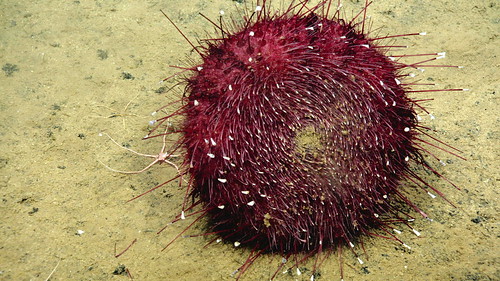
Sunday, the ROV spied this awesome beast, a weird sea urchin in the genus Aspidodiadema. Although there's at least one species known in this area, A. hawaiiensis, I'm not sure that this is the same thing.

I've talked about this urchin before.  The spines bow out from the central body and touch the bottom rather than simply projecting outward as they do in other species. They are unusual in that they use their spines to "walk" along the sea bottom.

Here's a diagram of another species but with the "walking tips" clearly deployed on the bottom


On Sunday, they spied ANOTHER Aspidodiadema sp. But the video actually captured the unusual TIPS of the walking spines!!!
Do you see those round, circular tips that are on the tips of the spines??

Look at the red arrows below pointing to the "walking cups" on the spines that the urchin uses to move!
What's also kind of interesting is that this animal (and I think a few others) were actually CLIMBING a rock face and not just walking along a flat surface as diagrammed by Mortensen back in the day. So, these do a lot more than just just support..

Think of the spines like the long legs on the spider robot from Johnny Quest!

The "walking tips" of the spines look sort of like little hooves that the spines use to gain purchase on the substrate probably in conjunction with the tube feet. The center illustration shows what the bottom of that "hoof" looks like as you look directly up into it.. basically a modified spine tip adapted to aid in movement!

So, we HAVE seen something like this before in  Echinothuriid or "tam o shanter" or "pancake" urchins! 

I've done this story more than a few times..with one of the most recent accounts here.

Long story short: The urchin walks on a bunch of little legs with modified tips that ALSO resemble hooves! 

Look for the little white tips on the spines around the bottom edge!! Those are how it moves around on the soft-muddy substrate.
Spiny sea urchin
Sea Urchin underbelly
Here's a close up of what those look like!!! Superficially similar to the ones in Aspidodiadema!  At least in shape..
But wait.. There's MORE????   How about in STARFISH???
That's right! I'm pretty sure I've found spines that might serve in a similar (or maybe opposite?) fashion in deep-sea sea stars!  The filter-feeding Brisingids!! (here)

I just published a paper last year which documents some work I did recently on Hawaiian brisingids!
The starfish actually live on old munitions and junky metal debris.. I wrote about it here

The species was named Brisingenes margoae in honor of Dr. Margo Edwards at the University of Hawaii! She is a professor of geophysics working on mapping this unusual munitions filled terrain! 

She was head of the project and invited my participation! 
After collecting these starfish I noted something rather interesting.. the tips of the spines that occur on along the tube foot grooves were stained brown from contact with the metal casings they were sitting on! 

The one on the right shows the brown tip on one spine..
 This suggested that these were actually inset or even anchored into the surface rather than just kind of pointing away as has been suggested from watching them filter feed..

But when you look further at some other species, you see that there's probably an additional way for them to remains stabilized on whatever bottom they happen to be sitting on..
Here's a close up of some of those spines in one species from the North Pacific.. The tips are kind of wide and hoof-like! Similar to what you see in Aspidodiadema and the echinothuriid urchins! 
The case for the functioning of these spines is still sort of at the "hypothesis" stage at the moment..but it seems like a good argument all things considered. It seems likely that they serve at least in part as anchors. But do they use them to move also? Little walking legs? Something in between? Do they vary depending on where they live?

This all makes sense though. Spines are how these animals interact with their environment. In these deep-sea habitats where you have a lot of water currents and unstable bottoms, these spines help them. Either as support or to help move efficiently where a soft tube foot might not.

Weird. But I love figuring out strange sh*t like this!!

Tuesday, February 23, 2016

Zen of the Feeding Sea Cucumber

      
You know what I find relaxing? Sea cucumbers. Specifically watching sea cucumbers just moving along wherever they happen to be and slowly and methodically digesting food from off the bottom of the ocean..

There is a real.. peace from watching them. Slow. Confident. Unworried. Sea pigs and other sea cucumbers... all with their benthic detrital serenity. Its soothing really.
Today: a little gallery showing some nice closeups to ease that tired day today!

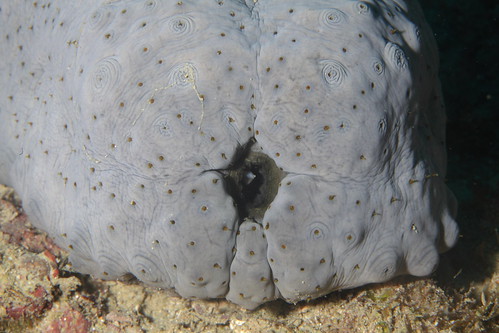
Sea cucumbers are versatile creatures. Some species can actually feed with filter feeding apparatus inside their anus  (shown below). If you're not feeding from the front there's always the other end...
Sea Cucumber Anus
Here's the business end: the mouth on some glass, picking tiny detrital food off the surface. Although "scavenger" and "detritivore" doesn't sound very glamorous, it turns out that this serves a vital function to ecosystems in both shallow and deep-sea ecosystems (see the secrets of sea cucumber poop here! )  Sediment is aerated and "turned over" and doesn't just build up anoxic organics... etc.

here is where it all starts!

                 
Some nice video of a Japanese species showing aforementioned feeding tentacles which are used to pick food off the substratum 

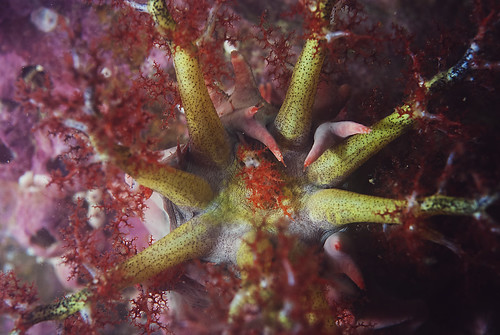
Several more species with their feathery feeding arms extended..


Here's a nice one showing one of the feeding arms with food being moved INTO the mouth...

and here...
Power feeder (Pseudocolochirus violaceus)
and let us end with one of the most beautifully shot sea cucumber feeding videos!! Taken by "liquidguru"! 

Lembeh Magnum Sea Cucumber from liquidguru on Vimeo.

Wednesday, February 10, 2016

Heart Urchins! Burrowing their way into your Valentine's Day!

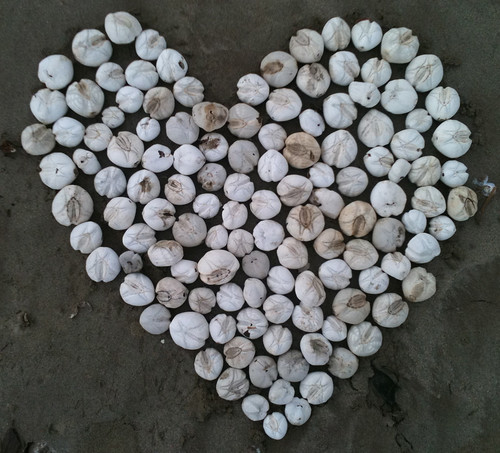
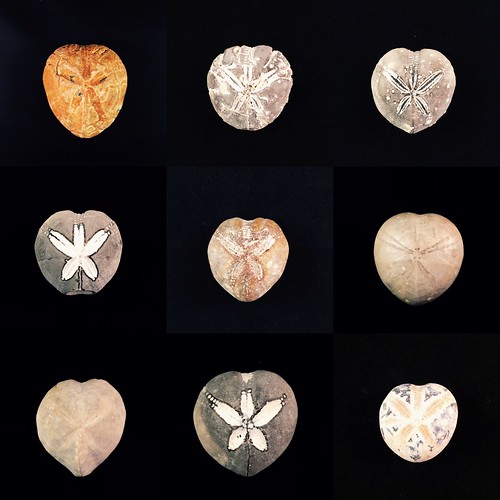
Urchin hearts
So, yes, that most dreaded of days, Valentine's Day is around the corner! What better echinoderm though to celebrate a day about affairs of the heart then HEART urchins!
Yes urchins, that are shaped LIKE hearts and will burrow their way into yours!!

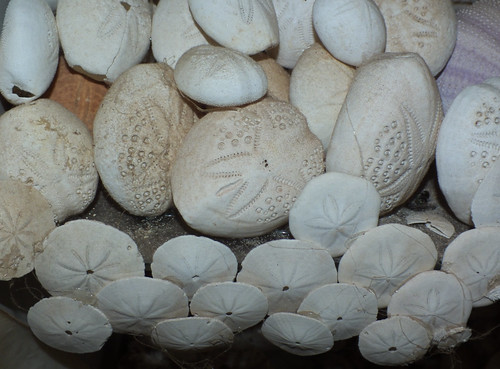
Heart urchins are in fact what's called "irregular urchins", a subgroup known as spatangoids.. These are sea urchins which DIG into sediments. They are closely related to sand dollars (both of them are considered "irregular urchins"). I've discussed this in detail here. Spines and jaws in these animals are specific adaptations for this life mode.
Loveniidae>Breynia desorii Heart Urchin DSCF1788

I've actually written about one of the better known heart urchins, Echinocardium here.  Note the name of that genus, Echinocardium which breaks down into its root words Echino for "spiny" and -cardium for "heart."

As I've discussed elsewhere, heart urchins live primarily in sandy or sediment-type bottoms. They occur widely around the world and although most people don't immediately recognize them, they are pretty diverse, about 18 families with many, MANY living species and even more fossils...

They even go by many, many colorful common names "sea potato", "sea eggs", "sea hedgehogs", etc.


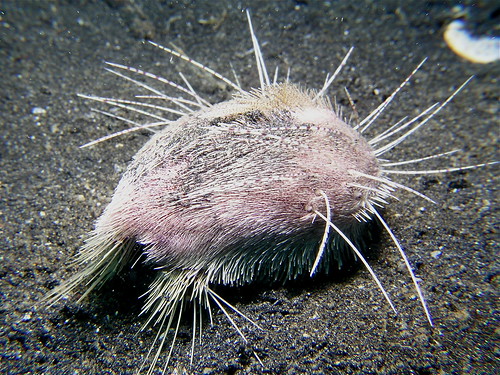
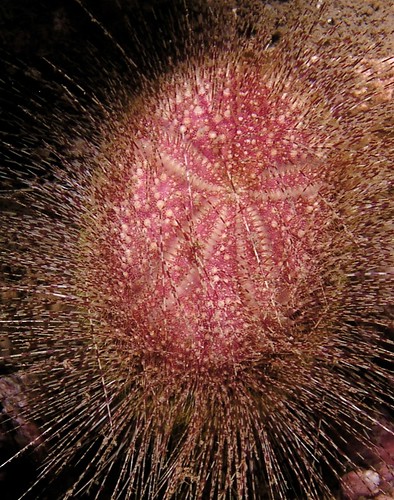
Spiny! 
When people think of sea urchins, they usually think "spiny ball" and heart urchins are no different! BUT they have urchins that are modified as part of their life style to burrowing/digging through sediment..(as we'll see)

SOME species, such as this Lovenia (top) and the Eurypatagus(?) below have very long and pointy spines most of which you'll notice, are all directed backwards. They would otherwise seem rather ungainly for digging..but these live in shallow-water habitats and the spines, sort of akin to those of a porcupine, seem to aid the animal as defenses... 

Elongate heart urchin

But the spines can also be used to aid in movement and these urchins move quickly when they want to...
Here's five reasons why, you should LOVE heart urchins!

5. They Dig into and eat sediment!
Let's face it, heart urchins are frakkin' adorable. They look like little underwater moles! Here's a nice cartoon of how they live.. basically they love being buried under the sediment/sand and stick their tube feet up out of the top to respire and so forth..
From Nichols 1959
But why show you a diagram when you can  JUST WATCH IT!!


Check out these cool videos of various heart urchin species from Japan and elsewhere... the one with long spines looks like Lovenia..but there's a couple of species and these are found in all of the world's oceans! Southern (Antarctic), Arctic, Atlantic, Indian Ocean, and the Pacific...

4. Bioturbation is important
You don't often SEE heart urchins that often, but that doesn't mean they are unimportant. They are fairly significant bioturbators! i.e. animals that dig through, aerate and mix up the sediment!

NIWA's Drew Lohrer wrote this really nice summary(2003) of the importance of the heart urchin Echinocardium and their primary impact: bioturbation.

Basically, animals that live in sediment, DIG. And their digging imparts an important biological impact: This distributes nutrients, mixes up the sediment allowing oxygen to be transported around, basically leaving the sediment in a place where OTHER animals would be able to use it. 

Here's is Lohrer's simple but lovely diagram showing how this works...
3. Heart Urchins were around during the time of the dinosaurs! 
As a result of the heart urchin habitat (being buried or mostly so), their skeletons are favorably inclined to be buried and preserved as fossils.
Echinoid

So, heart urchins occur as far back as the JURASSIC with rich faunas in the Cretaceous. So yes, while big reptiles like Tyrannosaurus and etc. were running around on land? Heart urchins and their relatives were digging and moving around on the seafloor during that SAME time period!!

Heart urchin fossils are VERY informative in the fossil record and a useful model animal for understanding extinction, macroevolution and rates of evolution during that time period. 
Micrasters.
1. Environmental Indicators!
So, you want to know how animals with "academic interest" have a practical use??  Well, as it turns out Japanese heart urchins, including Spatangus leutkeni, Brisaster latifrons and Echinocardium cordatum were among three species used as indicator species to detect Cesium in and around Fukushima! 

These were only a few indicator species of course, the others including sea cucumbers and polychaete worms. BUT these are all part of the infauna..that is the animals which live in the sediment and digest the organic materials from the mud and so forth. 

Many infaunal echinoderms were used as part of this, apparently as yet, unpublished study...


Extra! REPRODUCTION! Massive aggregations & spawning video!
And of course, there's SEX. I wrote, wonderingly, about the massive reproductive aggregations of Maretia here. I still don't know much more about it. 


Here's a cool video of a heart urchin from Bonaire. So on that note, Happy Valentine's Day if that's your jazz... 


Tuesday, February 2, 2016

What's New in Sea Star Wasting Disease?

image by Jonathan Martin
So, my apologies for the delay between my last post and this one. Between traveling from the west coast, the blizzard and my laptop experiencing..."difficulty" I've missed one or two posts... But! here's what I have been up to...

So about two weeks ago I was in Seattle at the Sea Star Wasting Summit, hosted by the Seattle Aquarium!

This was an informal gathering of about 35-40 people who work on the west coast of North America, ranging from Alaska to Southern California to report on various aspects of Sea Star Wasting Disease (aka Starfish Wasting Disease aka Starfish/Seastar Wasting Syndrome).
The meeting brought together folks from a broad range of occupations that all have had some experience or contribution to our knowledge of the Starfish Wasting Disease phenomena: pathologists, veterinarians, ecologists, citizen scientists, aquarists, taxonomists, educators, and etc..
So, while I can't repeat everything that was discussed (some of it was still unpublished) here are some further insights...

What do we know?
1. Who? The disease seems to affect sea stars in the family Asteriidae most acutely. This includes Pycnopodia helianthoides (aka sunflower star), Pisaster spp (esp. P. ochraceus-the Ochre star), Evasterias troscheli (mottled stars) and Orthasterias koehleri (rainbow stars). Pycnopodia helianthoides, the sunflower star seems to have been one of the hardest hit...
Image by Jonathan Martin
140101_scuba_017

but ultimately the disease seems to affect nearly every shallow-water seastar species on the Pacific west coast. So that includes leather stars (Dermasterias), Bat stars (Patiria), sun stars (Solaster) and so on...

There were a few species which showed much lower incidence of being infected but its unclear if that's simply an artefact (i.e. they aren't seen that often to begin with), less vulnerable, but there is really no further data...
Image from this article in Vice: http://www.vice.com/read/the-wasting-0000650-v22n5
2. Where? The disease, as part of the larger event starting in 2008 is now known from southern Alaska, British Columbia, Washington, and Oregon down to Southern California (and apparently Baja California).
map from http://data.piscoweb.org/marine1/seastardisease.html
At the moment, almost all of our observations are from intertidal/subtidal observations. Nothing really substantial from "deeper" water...

There is another "die off" event on the east coast but it has not been as thoroughly evaluated, so not sure.  This 2012/2013 blog by Elena Suglia documents some of this phenomena 

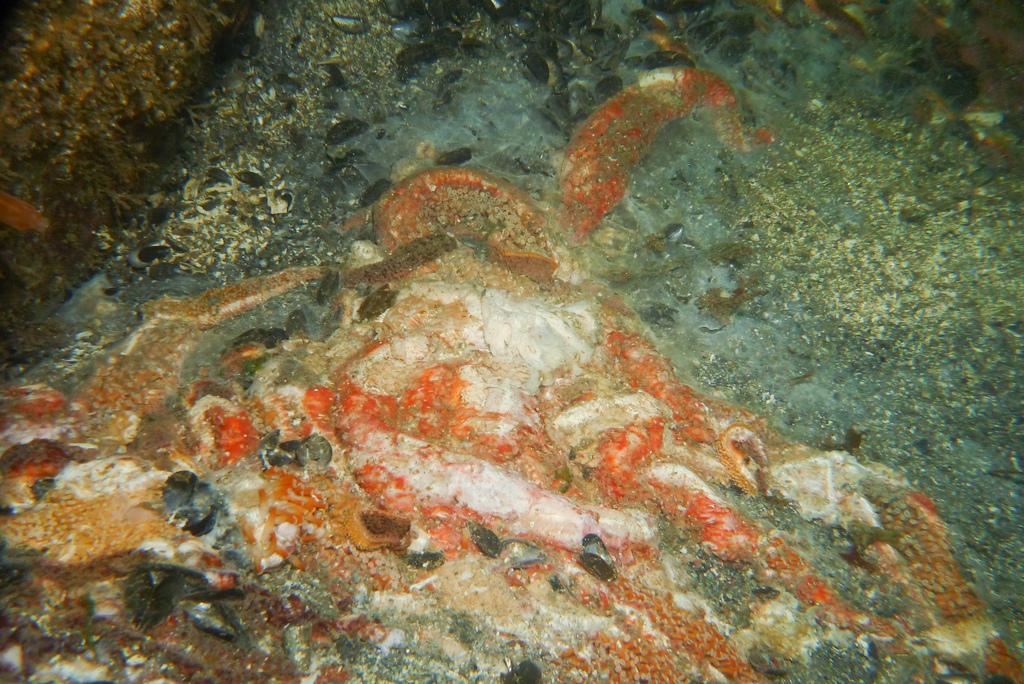
3. What? Symptoms of the disease of course are widely known and have been outlined in detail here at the UCSC Seastar Wasting page. The disease begins with white lesions and tissue necrosis (as shown below) and leads to "wasting" or "melting" of the body into an ugly pool of tissue and ossicles... But there's MUCH more to be seen at Seastarwasting.org in terms of characterization, etc. 

There's a whole bunch of observations of these symptoms all over the internet Both from my prior blogs: Pycnopodia die off, and a further account here..  and many, MANY accounts of starfish wasting disease from Allison Gong's blog.

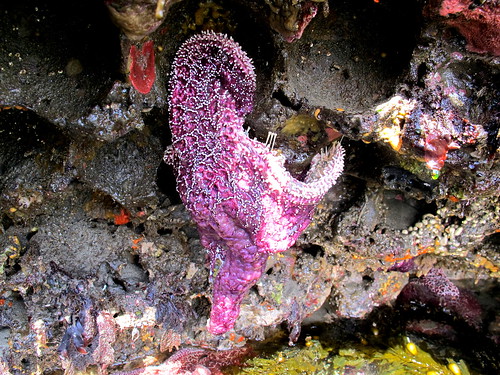
But, one important new clue: The Gonads! One of the interesting details which Ian Hewson reported at the SSW Symposium (link here) which was further reported in the news was this bit: the gonads in infected sea stars are often inflamed with tissues sometimes extruding from the gonopores (the openings through which the gametes are emitted). Note the white blobby bit between the arms of the purple Evasterias troscheli (mottled star) in the picture below...
image by Allison Gong
A further important consideration is that gonads and reproduction are tied to activity during certain times of the year as temperature fluctuates. This might also be an important consideration.

This is will likely be important in piecing together the actual cause of how the disease actually kills the sea stars, which remains poorly understood.

Challenges: figuring out what causes the disease is difficult and remains elusive.
So, by now many people have likely seen Ian Hewson et al.'s (2015) article showing identification of the Sea Star associated Densovirus (SSaDV) with the disease. Popularly reported here and in other news outlets..

This was an important first step. But its important to realize that we still do NOT KNOW that this is the actual CAUSE of the disease. 
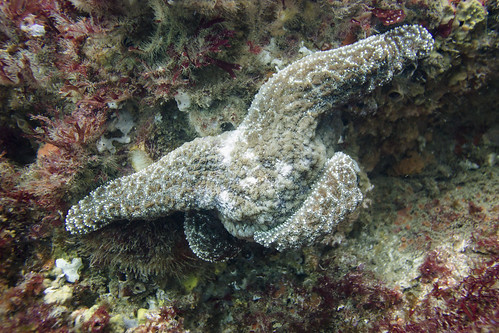
Sea star with (likely) wasting syndrome
Probably one of the most important lessons I  picked up from the meeting was how careful the work of disease pathologists needs to be. 

Correlation is NOT Causation! 
Powerful genetic tools have allowed us to characterize the SSaDV virus and experiments show that it is ASSOCIATED with the disease. But we have yet to identify exactly HOW Starfish Wasting Disease actually works. In other words, what actually happens to the animal to initiate death?

Just because we have this "disease associate" does not actually mean that it causes the disease.. it could simply be present with the disease as part of the suite of entities (e.g., bacteria, protists, etc.) taking advantage of the sick animals. Or it could be something already present that has become fouled or modified by some other factor.

My take away message was that MULTIPLE lines of evidence (genetics, tissue analysis, external observations, etc.)  should all converge on the same conclusion. In other cases, pathologists are able to actually observe the agent (virus, bacteria, etc.) perform whatever action it takes to create the disease and thus the symptoms..

At this point, we are still working on what actually causes the "wasting symptoms" to occur. This is not to say we are clueless about it..but a definitive cause has not been shown.

One of the biggest issues we have right now? Understanding starfish biology.
     A LOT of the study of invertebrate physiology went "out of style" in the 1960s along with a bunch of natural history research. There are many instances when we just don't understand what "normal" is for sea stars (or their relatives for that matter).

And so..the other powerful tool at play? Careful critical thinking..

(and yes.. what this means in the real world is that NO zombie or science fiction disease movie is likely EVER going to be solved in two hours!!)

What Tools are being used?
   So now that I just got done saying a whole bunch of stuff about care and critical thinking, that is NOT to say that scientists are not throwing a whole arsenal of scientific tools at this problem to try and obtain as many different types of data as they can!

Dr. Felicia Nutter and student Eric Littman at Cornell University for example utilized sophisticated imaging techniques ranging from traditional X-rays to CT scans in order to look at the endoskeleton in afflicted sea stars, which it was thought, might be showing decreased skeletal density.
Image from http://phys.org/news/2016-01-imaging-technology-combat-disease-endangers.html
Other tools include the Illumina technology sequencer which was used to investigate the phylogenomics of the virus and other microbes present in diseased individuals. Long story short: Tissue are taken from infected animals, recover DNA (or RNA) is extracted and purified, these machines sequence it (i.e., analyze it), and this permits identification of the organisms present. This was how the SSaDV (the sea star virus) was identified and characterized...along with the many other bacteria and other ambient forms living in/on the sampled sea stars..

These are among the many types of tools being applied..but there are certainly many more that fall into the more traditional roles: taking tissue samples, aquaria and freezers for living animals and tissue specimens

But as mentioned above, all roads should lead to Rome.. and with any luck, the results from these studies should all be consistent with one another...

Are there/Will there be Ecological Effects??
So, although a LOT of the attention both public and scientific is on the disease itself, many folks often forget that the after effects of the disease will also be very significant!

Sea stars such as Pisaster ochraceus and Pycnopodia helianthoides occupy very important roles in marine ecosystems. Called keystone species, their presence and/or absence as predators is thought to have a HUGE effect on the organisms around them.. (I wrote up a little of this on Pisaster here)

So what happens when those predators are suddenly gone??

sea star shortage
There were no rigorous and statistical cases showing a clear "cause-effect" loss-of-predator-leads-to-increased-prey data presented. But in many cases there were anecdotal observations that "trophic cascades" might be starting... This one for example, allege that there has definitely been a shift in abundance of prey species..such as sea urchins as mussels.

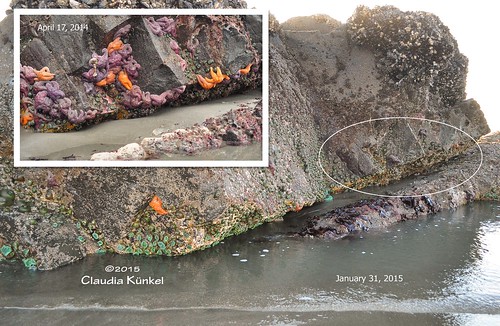
That basically means that the loss of a predator triggers an increase in prey (here was an earlier blog post about urchin barrens).  
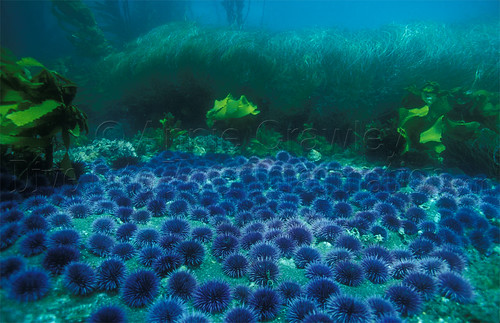
Purple Urchins

which then results in some other ecological effects in the ecosystem.. say, a decrease in kelp coverage (resulting from urchin overfeeding) which in turn results in the loss of kelp-inhabiting species and so forth and so on....

Some scientific observations suggest that we might be seeing some of this.. but not necessarily everywhere.  Environments across the coast vary.... so what you see in some parts of California might NOT be the same situation in some protected cover in Oregon....

Time, further data and experiments will tell..

Other Miscellaneous Questions! 

1. Are all the starfish on the coast extinct?   Is my favorite species (e.g., Pycnopida, Pisaster, etc.) extinct?? 
In NO instance is ANY of the species surveyed thought to be completely extinct. Some individuals and news agencies have either misreported or exaggerated the the impact of the disease. MANY populations have been decimated. Localized populations have been wiped out...but there STILL are healthy populations of all afflicted sea stars species.

So, some species are "locally extinct" which means that you might not see any at your favorite local rock pool or pier but there's no evidence for complete and total extinction.

2. What about the juveniles we are seeing? 
There are many reports (such as this one in Nat Geo and this one in the OregonLive) of smaller individuals of various species, Pisaster, Pycnopodia, etc. being seen widely along the west coast where adult starfishes have been wiped out by SSWD.

There were MANY reports of these out in the intertidal zones along the coast. The significance of the juveniles is unclear at this point.   Possible reasons and questions as to why we are seeing them:
  • They are now more obvious because the adults are gone (and we are looking)
  • They have become more bold because the adults are gone.
  • Are there more of them present now because of absent adults? 
  • How fast do they grow? Will they enter in the former adults ecological setting?
Sadly, there HAVE been reports that small individuals can contract the disease. But they don't all seem to have it. So what's going on?? This whole dynamic involving juvenile species remains poorly understood.

If you see any, you can report them to the Seastar Wasting Website here.

You can download a nifty GUIDE to identifying tiny juvenile sea stars HERE.

3. Is the worst over?   
Yes. It seems to be, but mainly because most of the adults which carried the disease are themselves all gone. Its unclear what factors are at play insofar as why some populations have been more heavily hit than others.

4. Do Any of the standard aquarium antibiotics work? 
Many of the standard aquarium drugs (antibiotics, etc.) seem to be most effective against the secondary bacterial infections which attack the animals after becoming sick. But unfortunately, they don't seem to curtail the actual disease much if at all.

5. Is Climate Change/Temperature a factor? 
I would say yes. And others would agree with me (here). There have been several informal experiments and observations of seasonality which suggest that higher water temperature is, at least, significant and worth investigating as a factor. But, at the time of this writing, a clear paper has not been published which establishes a rigorous link.

6. Is the wasting disease caused by Fukushima/Republicans/Democrats/Cthulhu/Extraterrestrials/ Atlantis/Inner dimensional beings from the 7th Parallel? 
Nope. Not even a little.

My thanks to Lesanna Lahner, Ian Hewson, Melissa Miner and the other participants at the Sea Star Wasting Symposium!

Standard caveat: i've done my best to represent a LOT of information. Any mistakes are my own.

Further Resources:
The Sea Star Wasting Site at UCSC:
http://www.eeb.ucsc.edu/pacificrockyintertidal/data-products/sea-star-wasting/

Ian Hewson's blog about SeaStar Microbial Ecology: https://seastarwastingdisease.wordpress.com/

iNaturalist: Tracking Sea Star Wasting Disease:
http://www.inaturalist.org/projects/pisaster-disaster-tracking-starfish-wasting-disease

A useful summary page from Sanctuary Integrated Monitoring Network (SIMoN)
http://sanctuarysimon.org/projects/project_info.php?projectID=100401