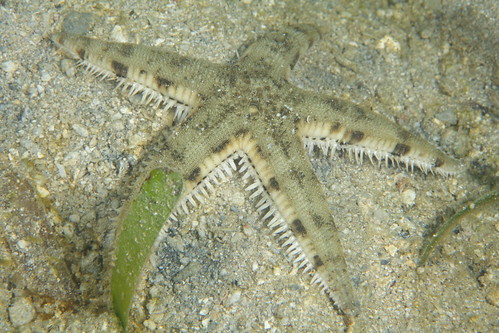
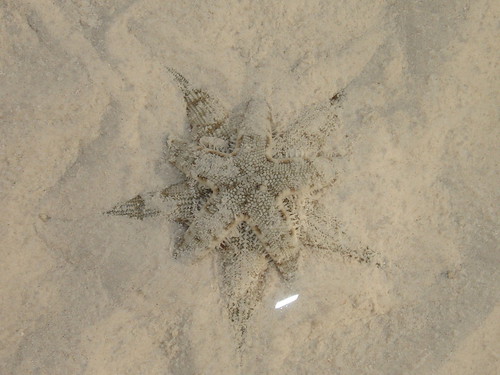
Greetings! Yes. I have been posting less frequently. Busy with various projects and winter season stuff!
Today's post is a kind of response to a fairly common request I get via email: "Can you help me ID this species of starfish from the Philippines?" (paraphrased)
A question I get from divers, photographers and students who actually live in the Philippines. And strangely enough I get it quite frequently and there are surprisingly few resources to help people with pictures.
In the past I have done variations on this by crowd sourcing images off places like Flickr and YouTube and its been awhile since I've done an "on line field guide." So I thought it would be a good time for another one!
With the exception of
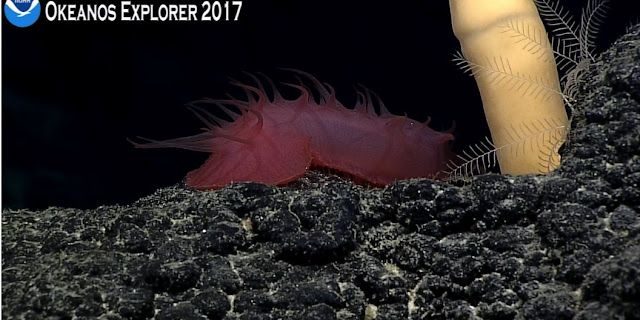
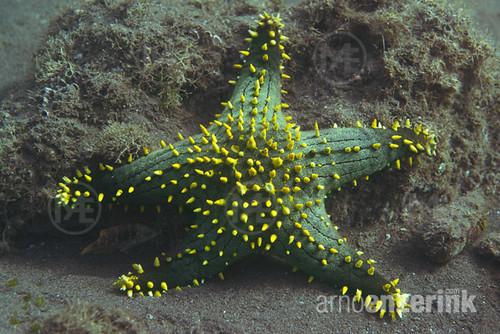
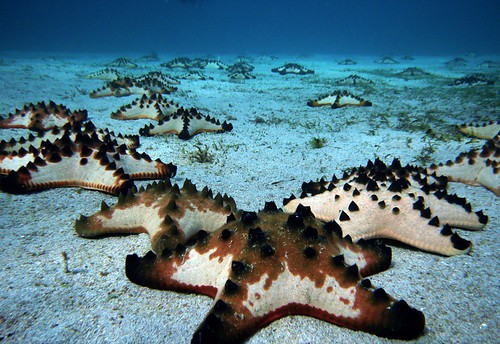
Acanthaster brevispinus (above), EVERYTHING below is taken from Flickr and recorded as being from the Philippines by the photographer.
The Philippines has a rich, RICH diversity of sea stars (as well as many, other marine animals) and
so this "guide" won't be complete, but it includes several of the most frequently encountered species which are photographed and put on the web.
If you are looking for professional taxonomic monography of Philippine sea stars a good place to start
is the work of Walter K. Fisher at the Biodiversity Heritage Library. HERE.
There are many, MANY published ID guides to the Indo-Pacific area and I've identified species in many of those books. But these days, images of sea stars and other marine animals are so prolific, it became clear that it really wouldn't take much to curate a collection of these to provide help for people who want to know what the animals were who didn't have expertise to the published accounts..
Another place to look for a nice crowd-sourced inventory of sea stars
from the Philippines or anywhere is at iNaturalist! Go HERE. Identifications are not always from experts but its a good place to start.
I always like to remind folks when actually in the field.. look but don't TOUCH (or at least put it back!)
So here we go in reverse alphabetical order....
Pterasteridae
Euretaster attenuatus. This species belongs to the family of sea stars which are best known as "slime stars" in cold-water habitats. There's only been one account of the tropical species using "slime" as a defense and it wasn't really in a scientific journal.
This species has a distinct hole in the center of the disk called an osculum which allows water into the surface of the disk which is kind of like a circus tent that covers over the ACTUAL surface of the animal underneath (see the blog link above).
Its a species we know very little about. Another species,
Euretaster insignis is usually what gets encountered in the Philippines. This image however most resembles
E. attenuatus which was first described from New Caledonia. This is possibly a new record!
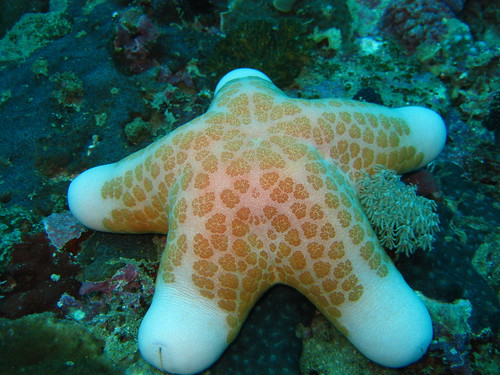
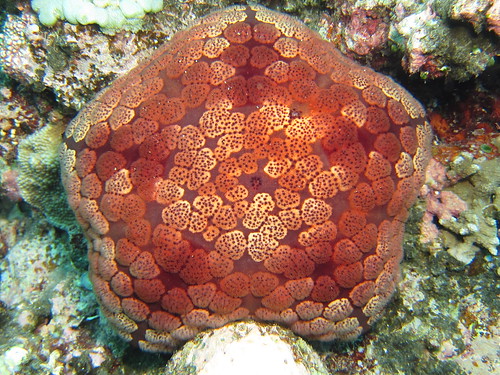
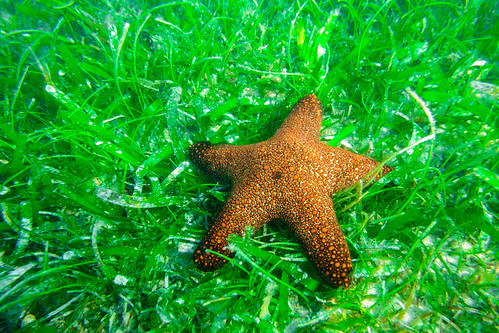
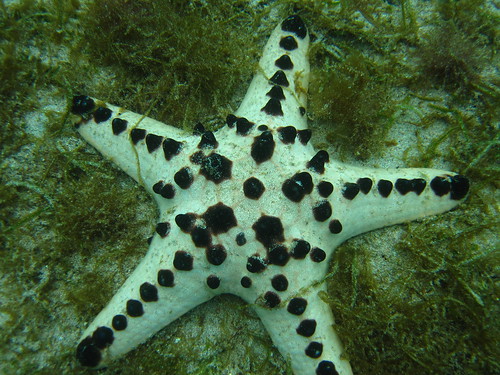
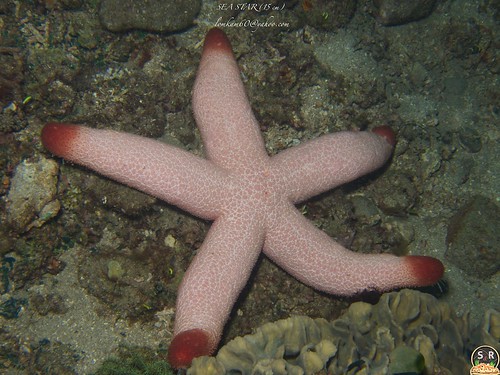
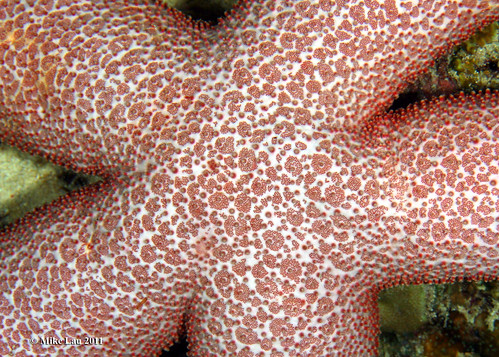
Choriaster granulatus Although this species is flesh colored and appears soft, it is quite solid to the touch and has a fairly thick and dense skeleton.
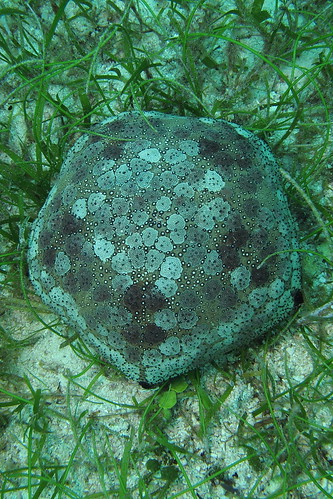
It varies widely in color and has a huge diversity in appearance. Some are covered with more spines..others with more ganules. Culcita spp. are predators on corals but aren't known to take the huge amount of corals that the Crown of Thorns eats. They are important to ecosystems in that they likely help control the structure of a coral reef based on the species it eats.
Its worth pointing out that when
Culcita is VERY small it has a more cookie shaped appearance which is quite different from the adult!
You can see this change in this picture.. from a blog I wrote a few years ago

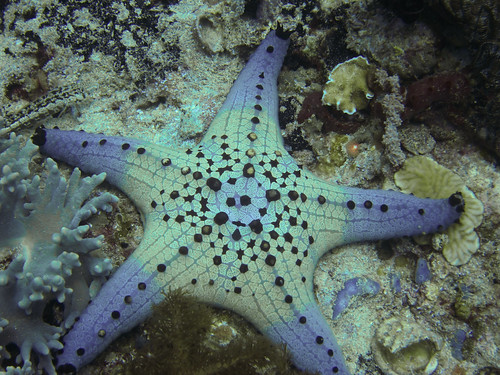
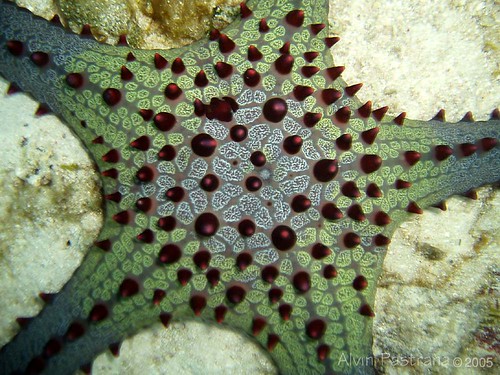
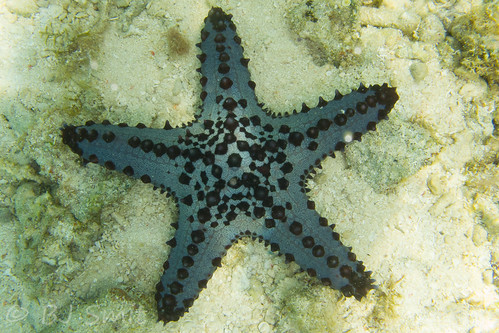
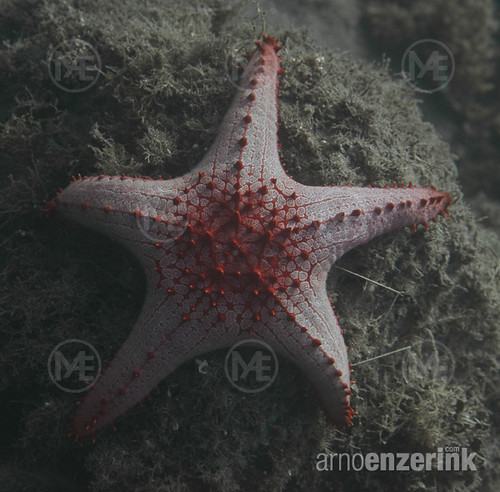
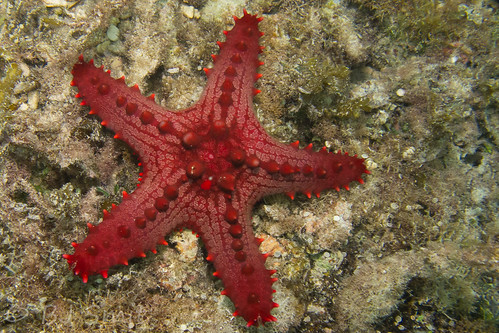
Pentaceraster tuberculatus:Distinguished by the absence of spines around the lateral edge (on the superomarginal plates), as well as the spines and other armament on the disk.
There seems to be some variation in color as well..
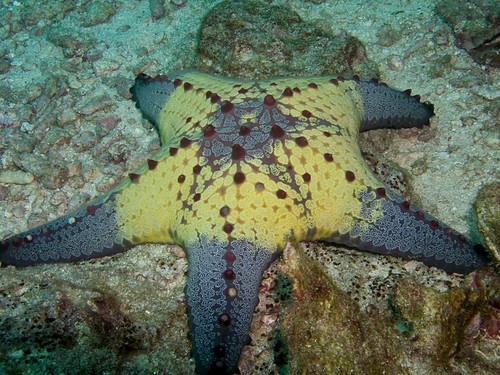
Pentaceraster alveolatus (but close to(P. multispinus) These two species are very poorly distinguished from one another. But both have spines on the superomarginals near the middle to end of the arm (should be few to none interradially) as well as spines on the abactinal surface on the disk.
Color seems to vary for this species...
These are more like Pentaceraster multispinus with the many, MANY spines present on the disk and along the superomarginal plates (i.e. along the edge).. But they overlap with Pentaceraster alveolatus type things above...
Do YOU see a new color or species of Pentaceraster?? Let me know!!
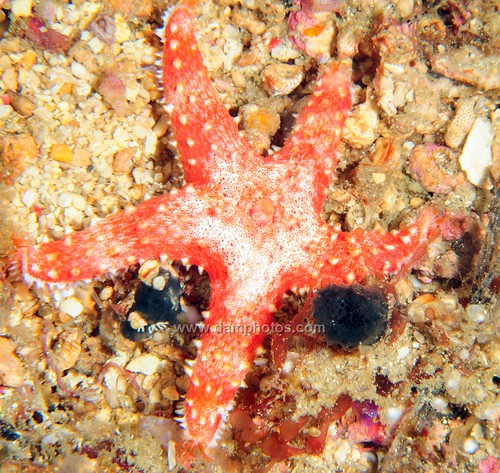
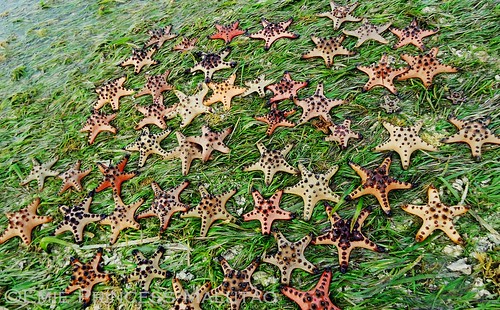
Pentaster obtusatus Here's another frequently encountered species. It has the distinctive orange with white highlights. Low bumps cover the surface, etc.
Basically- no spines are present on the edge of the animal (aka the superomarginal plates). P. nodosus is often found in shallow waters around mangroves and on sandy bottoms. They feed on microalgae and other tiny organic nutrients in the sediment.
(note-many of these pictures are artificially arranged for photo shoots! but they are useful for showing diversity. High density like this is not necessarily common)
Ophidiasteridae: This is probably the second most frequently seen group of sea stars other than the Oreasterids..especially the "blue Linckia" which is heavily "fished" by the aquarium and gift/shell trade. Most have long arms and small disks..
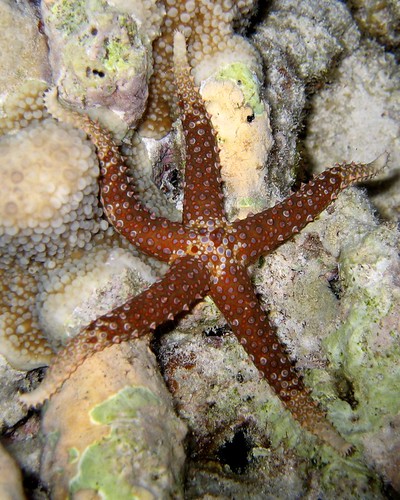
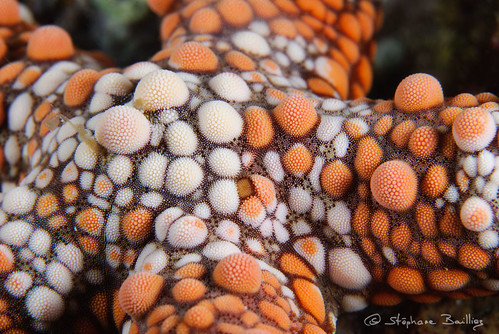
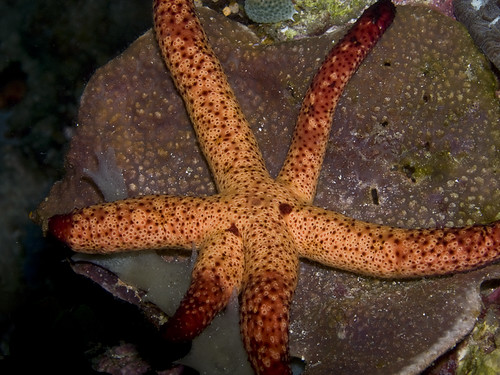
Gomophia aegyptiaca A species covered by strongly expressed bumps often with nipple-like tips!
This species occurs widely around the Indo-Pacific, extending into the Indian Ocean with many, MANY color variations. Food, biology, etc. are poorly known.
Linckia guildingi? While this looks to me like
Linckia guildingi, the truth is that I'd need to look at the underside to make a positive determination.
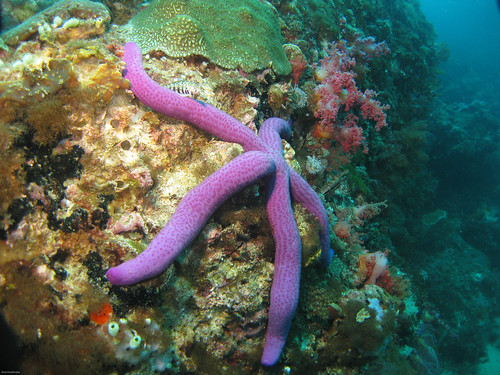
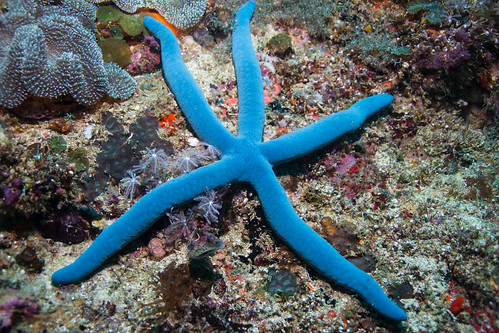
Linckia laevigata As I've written about before here, this is one of the most heavily fished sea stars in the Indo-Pacific. Not just for tourist baubles but also for the aquarium trade. Its a handsome species and frequently gets "volunteered" for tourist pictures, beach moments, and aquarium scenes.
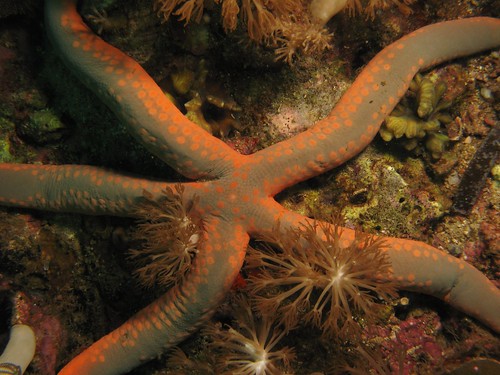
This is most likely the orange color morph of L. laevigata but could also be L. guildingi. Hard to be sure without a better look at the details on a specimen.
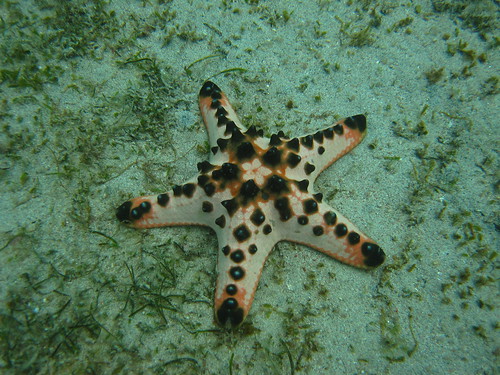
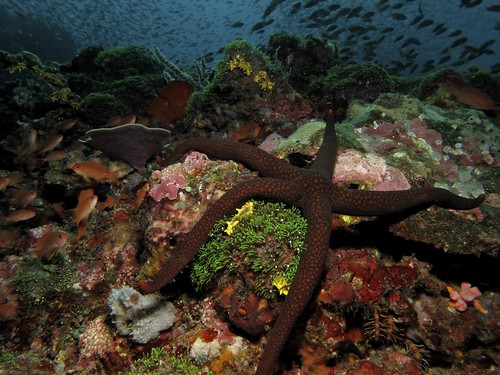
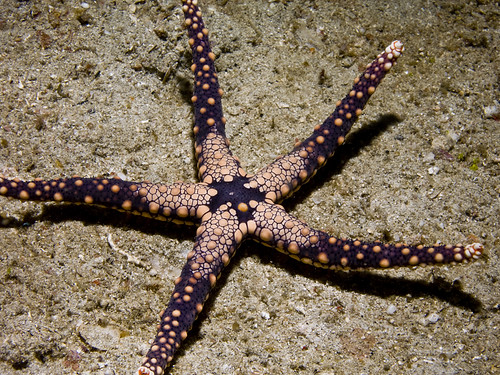
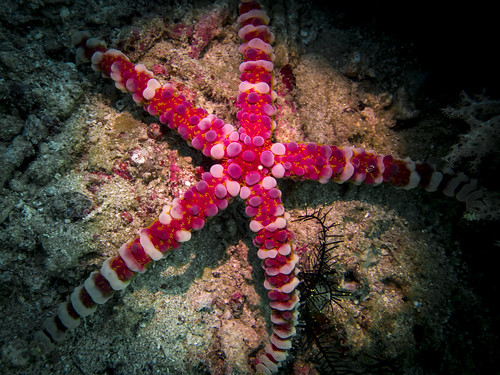
Nardoa frianti The genus
Nardoa is
named for the Italian naturalist Giovanni Nardo as I discussed in a post WAAAY back in 2008
There are MANY species. And they are often quite complicated. Even this one with its distinctive tubercles (the bumps) is conceivably part of a broader species complex. To make things even more complicated, you will sometimes see
Nardoa species with these big bumps in the genus
Gomophia.
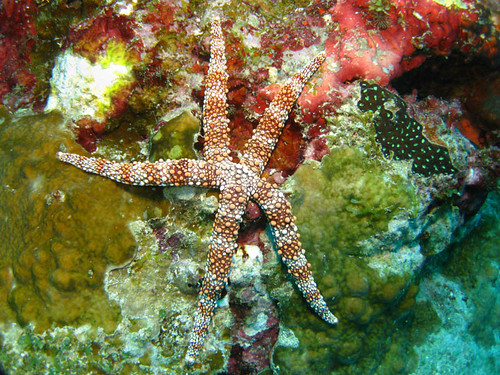
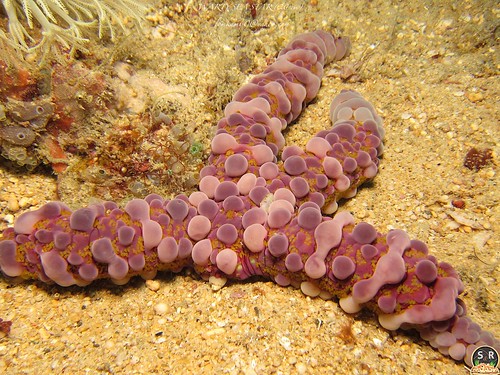
Nardoa sp. similar to "N. novaecaledoniae" This one has flattened or at least, MORE flat plates relative to
Nardoa frianti (above).
The exact species ID for this animal can't be made from a picture like this because we need to see the underside in order for the precise details. It LOOKS like a species that I would call
Nardoa novaecaledoniae but there are several other possibilities. Close up on the underside would be necessary.
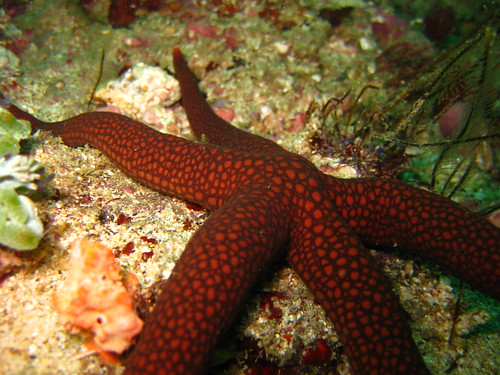
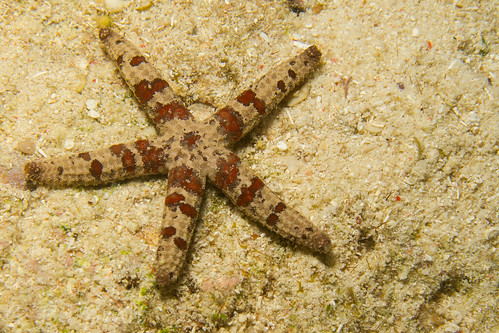
Ophidiaster. Here's another species that would require a full specimen (or at least better pictures) to correctly identify. At least one book id'd this as
Ophidiaster granifer but I'm not sure that's correct (or incorrect) because there's not enough info...
Mithrodiidae
Thromidia catalae: These are usually MASSIVE starfish. They can get up to 2 feet across! They tend to occur in deeper water (lower end of SCUBA depth).
They have relatively solid surfaces with spiny surfaces. There is relatively little known about their general biology.
Luidiidae. There's only one genus in this family, Luidia and I've written about the general biology of the group here. The genus named after Edward Lhuyd, a Welsh naturalist.
Most members of
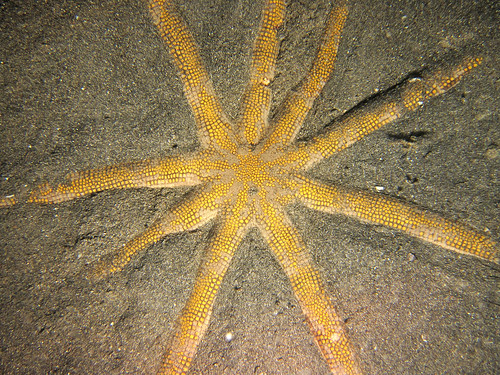
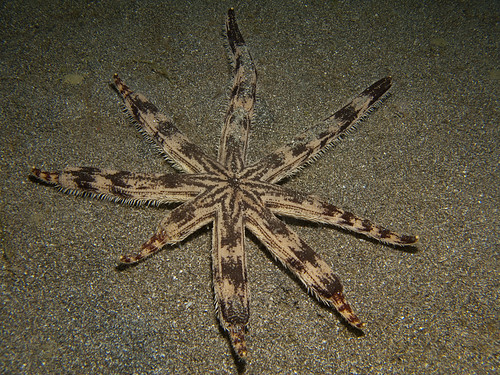
Luidia are 5 armed..but for whatever reason, the ones in the tropics are often BIG and have more than 10 arms!
Luidia avicularia?Interesting to see this one since it doesn't usually occur at shallow depths. But the color pattern matches.
Luidia maculata This is a fairly large predatory starfish, often found buried below the surface of the sand.
Goniasteridae This is the group that I've done the most work on since I finished my PhD. Some of my recent genetic work has also contributed to the re-classification of two species below (Fromia heffernani and F. monilis) to this family. They had originally been placed in the Ophidiasteridae (above) until my work showed otherwise...
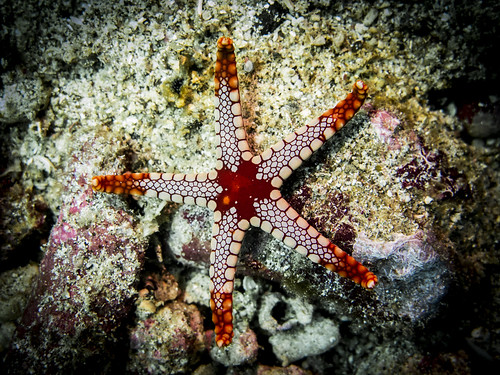
Fromia (formerly Celerina) heffernani (probably) This species and the one below have been the cause of some confusion for many years. Although I'm fairly confident the pictures show the animals correctly identified, the only way to be sure that the species are 100% correctly identified is to look at the UNDERSIDE.
I've discussed the problem with these species before in this post (here).
Fromia monilis (probably). Yes. the colors are slightly different.. but when these individuals are preserved they very closely resemble one another making it difficult to tell apart.
ADD to that? The colors can vary.. Yes. it will probably make someone a nice PhD thesis someday...
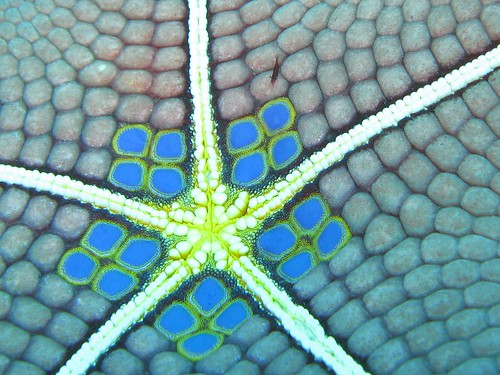
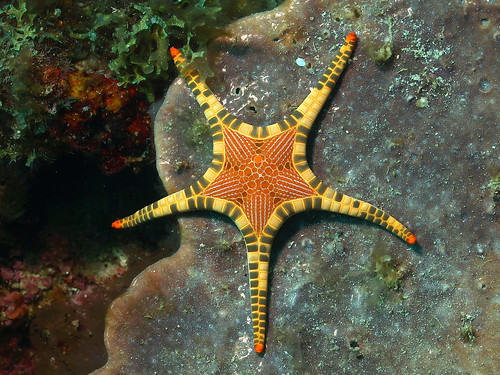
Iconaster longimanus. A gorgeous species of goniasterid with almost surreal colors and very striking patterns.
We know very little about it.
Echinasteridae
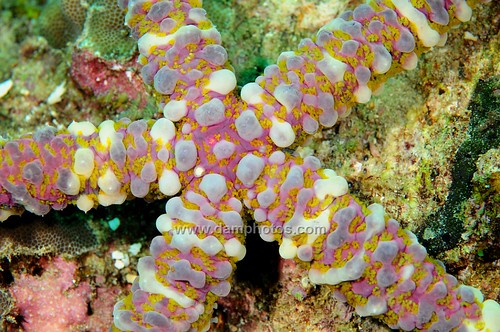
Echinaster callosus I've seen this species often mixed up with Nardoa frianti, above. The big difference is in the texture of the "puffy" structures on the surface. Nardoa's bumps are just that- hard bumps covered by granules.
The surface of
Echinaster callosus is covered by a bunch of big colorful puffy pin cushions. The big blobs are soft and each surround a sharp spine. When dead, they often deflate.
Colors are quite pretty and variable...
Echinaster luzonicus This is a distinctive species that is soft to the touch and often displays 6 uneven arms.
This species appears, at first to be fairly non-descript but a lot of things are going on with this species. In addition to the asexual reproduction and arm regeneration, this species is also often
the host to benthic comb jellies! You can read more about that here.
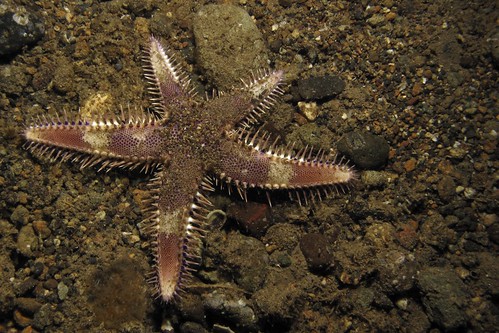
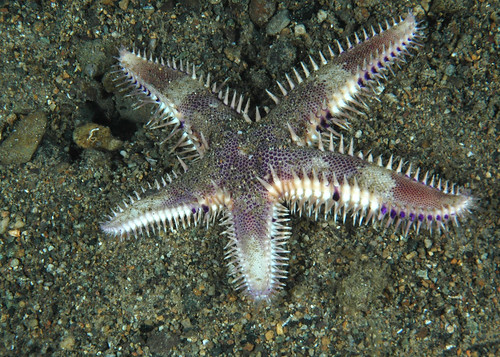
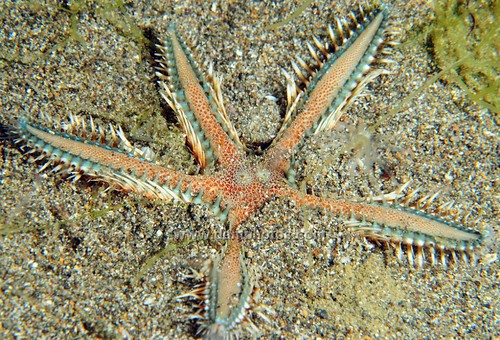
Honestly, these are a pain the keister to identify even WITH specimens in hand Working off pictures is often difficult. But there's easily two species that I've observed off Flickr. the most common name encountered is Astropecten polyacanthus, which also happens to be quite variable..but there are a few other species that show similarities and are often overlooked because people don't do the work.
Astropecten sp. 1
Astropecten sp. 2
Archasteridae
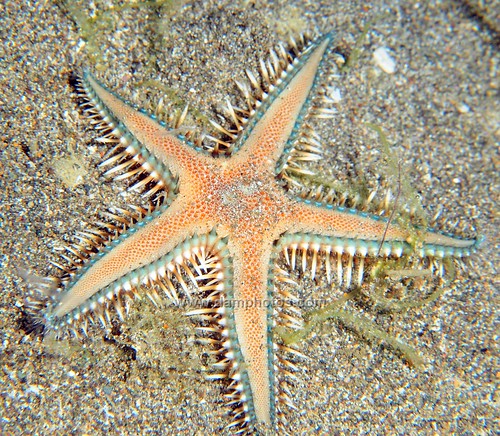
Archaster is kind a weirdo. they ALSO dig into sand and sediments but do so with different kinds of features.
Acanthasteridae
Acanthaster planci (or
A. cf. solaris). The notorious Crown of Thorns starfish has recently been studied using molecular techniques and revealed to actually be SEVERAL species. The one occurring in the Pacific has been referred to an older name,
Acanthaster solaris. But presumably there are still several details to work out..
Acanthaster brevispinus There is actually ANOTHER species of Acanthaster other than the one traditionally identified as A. planci. This one has relatively short spines (hence the name brevispinus).
And yes.. there are many MORE species known.. but for the moment, that's what Flickr gives us!