Showing posts with label #PolychaeteDay. Show all posts

Sunday, July 1, 2018

#PolychaeteDay 2018 Edition: Swimming Polychaete Worms!

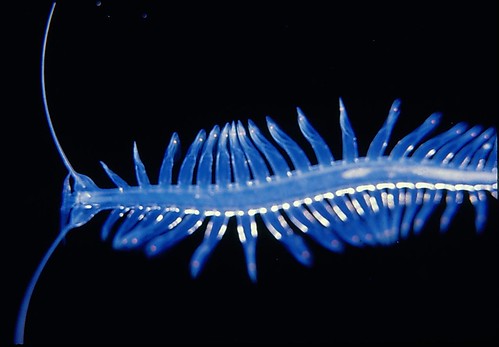
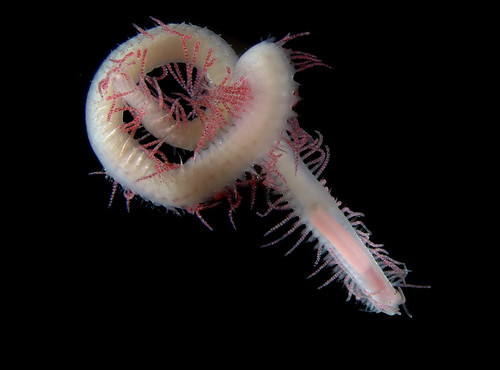
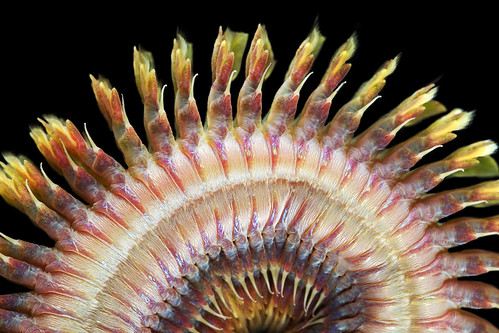
Photo by Karen Osborn
So, Every July 1st is the, now posthumous, birthday of NMNH curator Kristian Fauchald, who was one of the most prolific taxonomists publishing on polychaete worms of the 20th Century! 

This began in 2015 following his death (see the NMNH blog:  http://nmnh.typepad.com/100years/2015/06/1st-annual-international-polychaete-day.html
and has been held every year since then.. celebrated BOTH online and at the NMNH itself in Washington DC!!

I have honored this tradition with polychaete posts!

2015: Five Things you probably didn't know about polychaete worms: http://echinoblog.blogspot.com/2015/07/five-things-you-probably-didnt-know.html

2016: Five GREAT Polychaete Names!
http://echinoblog.blogspot.com/2016/06/five-great-polychaete-names-for.html

I missed 2017 because I was out at sea with the R/V Okeanos Explorer!  
http://echinoblog.blogspot.com/2017/08/okeanos-explorer-communities-deep-sea.html

But I've blogged PLENTY about polychaetes to make it up!

A post about Polychaete Jaws!
http://echinoblog.blogspot.com/2015/07/polychaete-jaws-and-proboscises-for.html

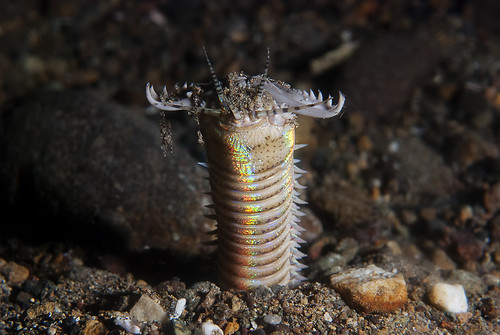
My post about "Who Named the Bobbit Worm?" (which actually involves Kristian Fauchald)
http://echinoblog.blogspot.com/2013/09/who-named-bobbit-worm-eunice-sp-and.html

Stunning Polychaete Photos by Arthur Anker! 
http://echinoblog.blogspot.com/2012/12/off-topic-panoply-of-polychaetes-photos.html

and Gorekia,  a polychaete which lives INSIDE an urchin!
http://echinoblog.blogspot.com/2011/02/gorekia-worm-that-lives-inside-sea.html

So, for 2018 I am BACK for #POLYCHAETE DAY!  So for this year.. a fun topic:
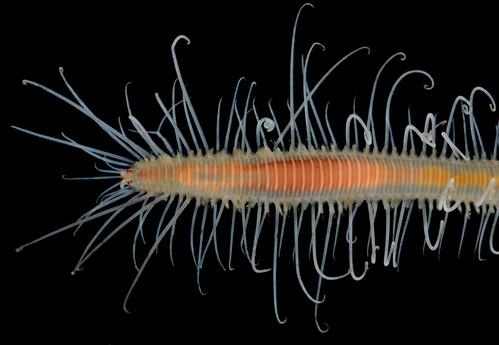
POLYCHAETE WORMS THAT SWIM!!

So, #2 to #5 are pelagic taxa.. that is they live exclusively (or mostly) in the 3-dimensional oceanic space ! They generally don't live on the bottom of the ocean floor. and so, they have adaptations which help them to live in this unique and vast area! as we'll see...

5. TOMOPTERIS
Swimming Polychaete
First up are some of my FAVORITE swimming worms! Those in the genus Tomopteris!

These are apparently VERY successful with a widespread distribution all around the world. There are apparently 35 to 50 species in this genus! About 15 of these occur in the subgenus Tomopteris (Johnstonella) which I suspect means there is some contention over how many there are..

BUT I can tell ya' this much! The NAME Tomopteris is Latin for "Split wing" which alludes to the paddles on each of their little legs!  and the fact that it is apparently "cut" into two halves..
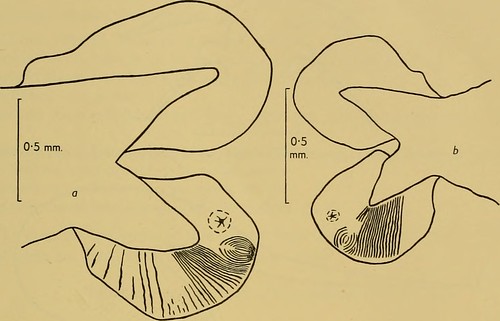
Image from page 220 of "Discovery reports" (1962)

Tomopteris is apparently a PREDATORY worm, with at least one species indicated as a predator on arrow worms !

and as seen in many swimming species they are BIOLUMINESCENT!  I don't have great shots of their glowie powers..but they ARE very photogenic animals.. so here's some video...


4. Alciopid Worms! 
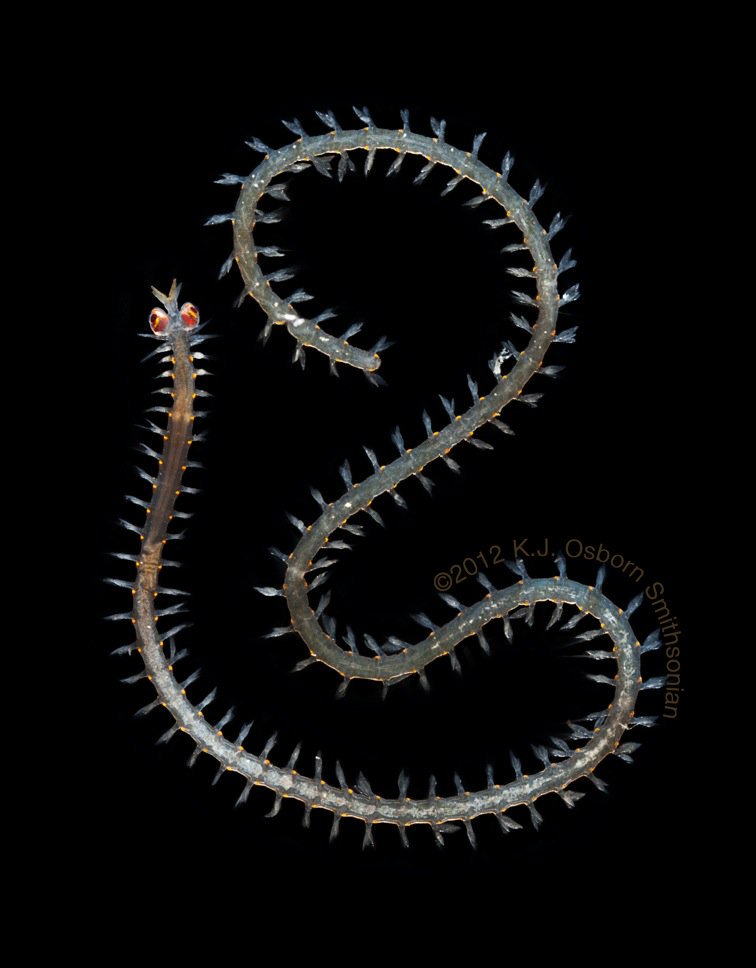
Image by Karen Osobrn NMNH StreamCode SMS: https://twitter.com/InvertebratesDC/status/881237769762349056

The family Alciopidae apparently includes about 12 genera, but I believe only  a few genera are actually pelagic.. that is free swimming.

Alciopid worms are most likely to be PREDATORY.  They have an ENORMOUS proboscis which is presumably used to feed ON other prey...
Vanadis

and They are known for having ENORMOUS EYES which are complex in a manner analogous to vertebrate eyes with lenses, irises, corneas and such.. So, they actually have well-developed VISION which is thought to assist in prey avoidance..
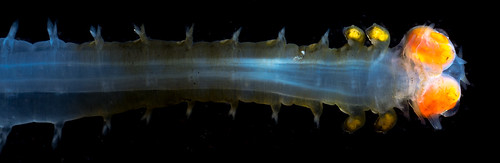
Pelagic Alciopid polychaete.

Here is a GORGEOUS chart on alciopid eyes via the Biodiversity Heritage Library Twitter: https://twitter.com/CarinaDSLR/status/575528089242959872


here was a nice back and forth about this deep-sea alciopid worm on Twitter!


Here's some swimming video! (thanks to Jackson Chu!)


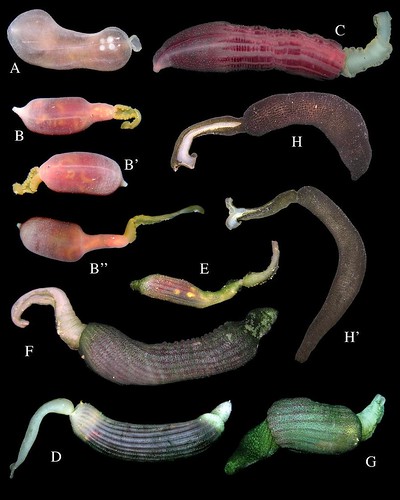
3. The Deep-sea Pig Butt Worm! Chaetopterus pugaporcinus


I'll be honest. There's not much that I can add to this which wasn't already said by MBARI when the species was described:https://www.mbari.org/a-worm-like-no-other/

These are part of a genus of segmented worms called Chaetopterus, most of which aren't actually swimming species.. They kinda look like this:      Many of them live in a paper-like tube..
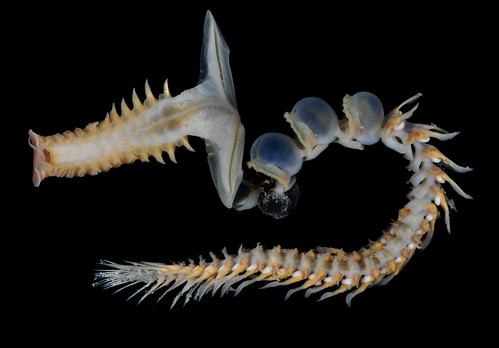
Large parchment worm (Chaetopterus sp) extracted from its tube

This pelagic species was unusal in having swollen segments wich gave it an unusual appearance...And yes..the Latin name epithet "pugaporcinus".. is LITERALLY translated as "Pig Butt" 

2. Swima bombaviridis! Swimming bomber worms! and relatives...(the Acrocirridae)
So, this is kind of a "two for one" deal because members of this one family of swimming polychaetes, the Acrocirridae actually have TWO very interesting members

Here were the "Squid worms" Teuthidodrilus samae whose very formidable appearance got them a notable write up in National Geographic among other places../ (https://news.nationalgeographic.com/news/2010/11/101124-squid-worm-new-species-science-teuthidodrilus-biology/)
and some "Squid Worm video! 
Karen Osborn and her associates later discovered ANOTHER member of this group delivered glowing green bombs as a defense mechanism! 

Here was a nice video of that discovery via California Academy of Sciences & MBARI!


and of course..we have seen other members of this group on Okeanos Explorer..
Engima Seamount 2016: https://twitter.com/WPolyDb/status/724026014725099520

1. EPITOKES! mmm... yummy! 
FINALLY.. the last category of swimming segmented worms is kind of a mixed bag.  This includes worms while swimming which are NOT a specific group  and NOT a group of worms that swims its entire life..
This is the unusual phenomena in polychaetes known as EPITOKY! 
This is the reproductive phase for many polychaete worms in which they physically change and  shift into a swimming form or mode! these species typically are adapted to bottom living.

Presumably this sudden ability to swim goes hand in hand with dispersal of the reproductive products.

Here for example.. we have an example of a sexually mature worm carrying its products while also swimming! aka engaging in pelagic life mode.
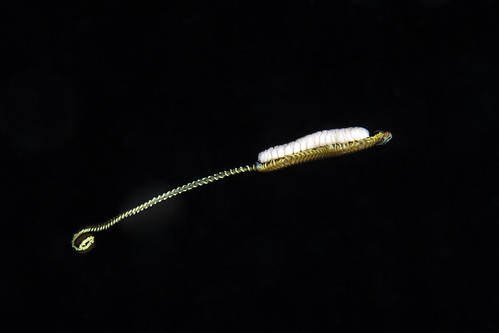
Epitoke Polychaete Worm with eggs

This change in life mode can be a bit of a surprise when your 2 foot long bristle worms are suddenly swimming around like giant snakes!


In the Indo-Pacific region, there are HUGE numbers of these epitokes swimming around in the water column and apparently, they are QUITE tasty..

Although prepared in many different ways, sometimes its apparently best to just have them on toast! 
from the original blog: http://mrlavalava.blogspot.com/2005_11_01_archive.html
Have I missed other examples of "proper" swimming polychaetes?  Almost certainly! 

Here for example is Poebius meseres which apparently feeds on marine snow..
and of course.. MBARI has a GREAT video that samples a bunch of them in spectacular fashion..


Enjoy the 2018 Polychaete Day! 
Thursday, June 30, 2016

Five GREAT Polychaete Names! for #PolychaeteDay

Beautiful polychaete worm (Syllidae)
July 1st, every year is now recognized as INTERNATIONAL POLYCHAETE DAY in honor of long-time and widely loved polychaete worm expert, Dr. Kristian Fauchald's birthday!  Dr. Fauchald passed away in April 2015
Here is a great post on Dr. Fauchald's academic legacy at the museum and beyond...

But the Invertebrate Zoology Department at the National Museum of Natural History honors his life's work with an INTERNATIONAL and MUSEUM wide education celebration of his favorite animals: POLYCHAETES!   If you are in the DC area feel free to visit Ocean Hall or the Q?rius Center to see specimens and displays about polychaete worms!!

Meanwhile, I honor International Polychaete Day with a polychaete worm-themed post!!  Here's the one I wrote up last year that revealed polychaete facts you may not have known!

And don't forget this is a TWITTER thing also!! Hashtag #InternationalPolychaeteDay

Here is the Storify Of International Polychaete Day from Last year!  

Among the points I made? that many polychaetes are actually named for greek nymphs, goddesses and other mythological characters!! Today.. I focus on that topic and share the etymology of some awesome looking polychaete worms!!

5. Aphrodite
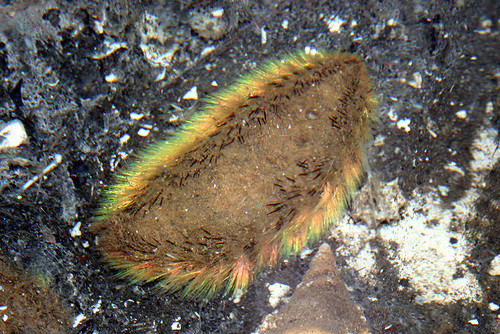
Probably one of the first polychaete worms I was able to recognize on sight was this gorgeous animal! Also known as the "sea mouse" the genus Aphrodite described by Linnaeus in 1758 is arguably one of the most distinctive of marine invertebrates.

It is of course named for the famous Greek Goddess of Love, Beauty and Sex. But I suspect what made her name particularly apt, was that she was born from the foam of the sea (aphros).. the complete name Aphrodite means "Risen from the Foam"
Image via Wikipedia: https://en.wikipedia.org/wiki/Aphrodite#/media/File:Sandro_Botticelli_-_La_nascita_di_Venere_-_Google_Art_Project_-_edited.jpg

Its many iridescent bristles and unusual shape have made it one of the more memorable animals to encounter in an Invertebrate Zoology laboratory or field trip. These and the various members of this family (the Aphroditidae) occur primarily in cold-water habitats and can be encountered in a wide range of habitats, from SCUBA diving to bottom trawls in the Antarctic!

And is any animal more deserving of the name? Stunning.
Sea Mouse

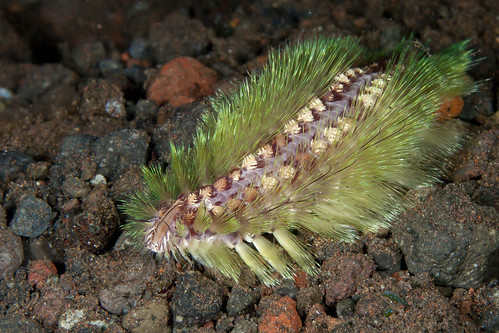
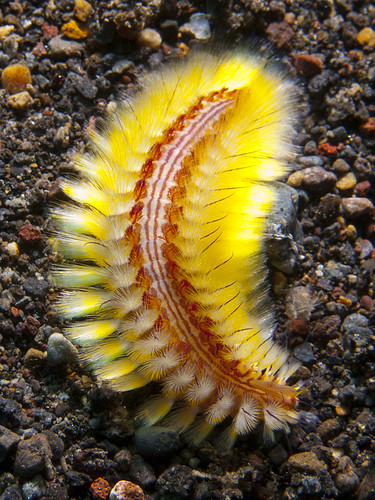
4. Chloeia
Perhaps one of the most strikingly beautiful fire worms (a type of polychaete with very inflamatory setae) is named for the female name Chloe. Given that the name was assigned by none other than the famous French naturalist Lamarck in 1818, the name may be in reference to Chloe from the Greek story Daphnis and Chloe

Chloeia is a worm with large, colorful bristles and occurs throughout the tropical Atlantic and Indo-Pacific, certainly the beauty of its namesake!
Chloeia sp.
Chloeia flava
Images of  "Chloeia flava" are seen commonly on various image and video websites. Its not clear if these are all correctly identified, but they DO show a wide range of colors and patterns!! 


3. Swima  & Flota
The "truth in advertising" award for polychaetes (in the Accrociridae) goes to these two pelagic worms with names that essentially DESCRIBES their life style! So, for Swima, was named for that species ability to SWIM.

The genus name Flota would seem to similarly suggest "float" in Latin..


There is of course a GREAT story surrounding Swima that you can watch in the MBARI video below but essentially Swima, with one particularly appropriate species, Swima bombaviridis can actually relelase GLOWING BOMB of BIOLUMINESCENCE as a defensive mechanism!(read more here

 You can read MORE about both of them aMBARI's feature story! 
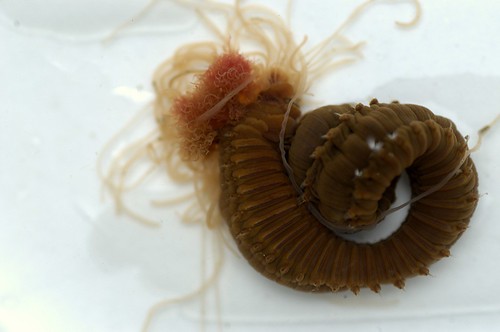
           
We've been seeing SIMILAR types of worms on the Okeanos Explorer dives off Hawaii! I'm honestly not sure which genus we are seeing (or if there's a third? I am simply ignorant of)
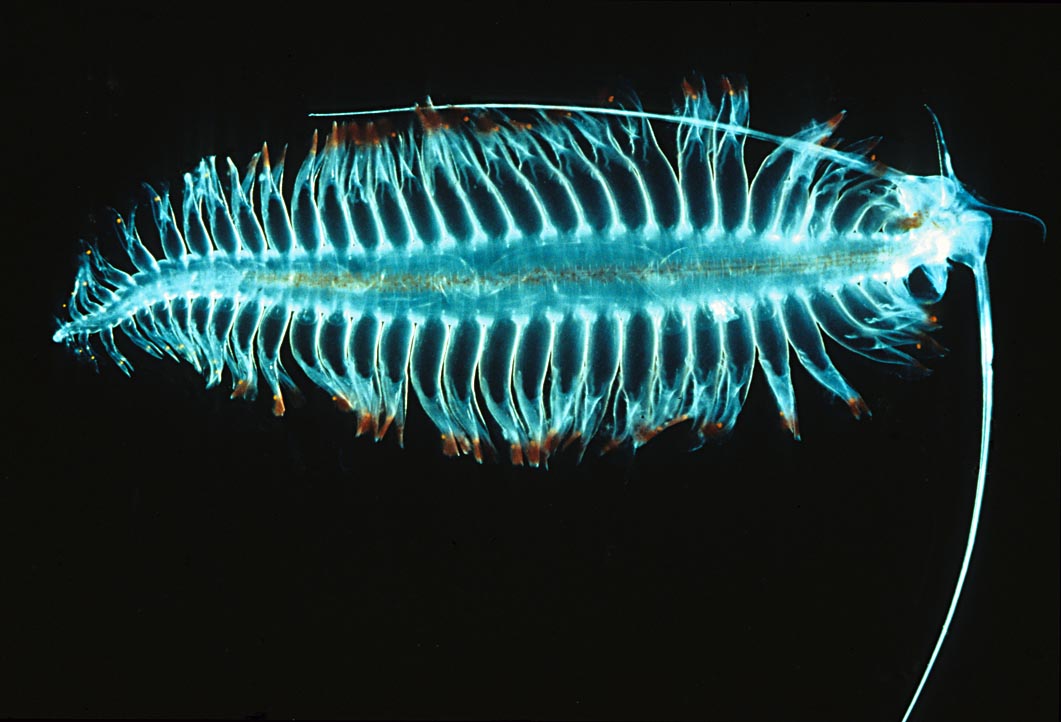
Here is one of those swimming Swima worms with some... creative embellishment! THANK YOU Amber Cobley on TWITTER! 
2. Syllis & the Syllidae
Another bunch of polychaete worms whose name was apparently inspired by a classical mythological nymph is Syllis! Who was a naiad nymph from Greek mythology! (here
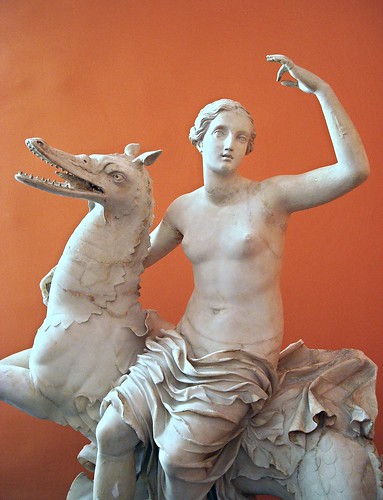
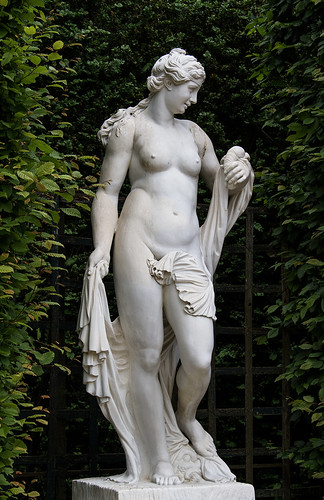
Disclaimer: Statue of a generalized classical nymph intended to represent concept and NOT a statue of Syllis! 
Syllis and all of the members of the Syllidae are quite gorgeous polychaete worms and its not hard to see how Marie Savigny and Lamarck saw fit to naming them after a Greek naiad! 
Freek worm
Pterosyllis
Syllis garciae
1. All the Worms named for Kristian Fauchald! 
International Polychaete Day honors Dr. Kristian Fauchald, but EVEN IF the event were to pass, his name has been immortalized into the polychaete literature!! 

Based on a search of the WoRMS database (World Registry of Marine Species), as of this writing, there are approximately FORTY polychaete worms which carry the name "Fauchald"!!

Most are species epithets but there are at least TWO genera, Fauchaldius and Fauchaldonuphis

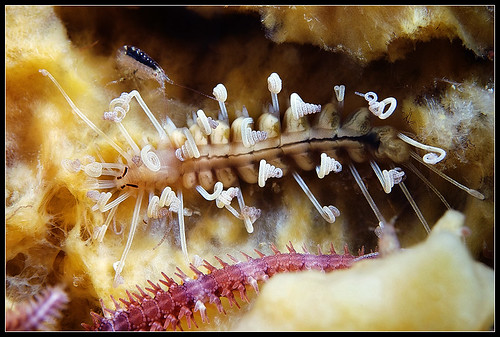
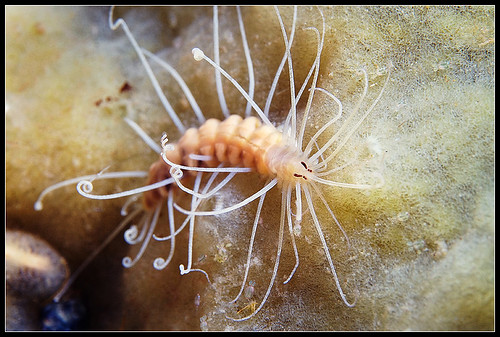
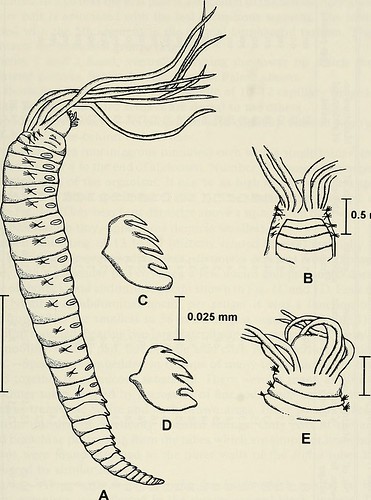
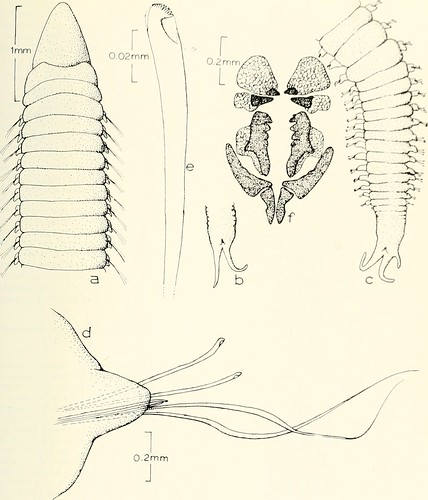
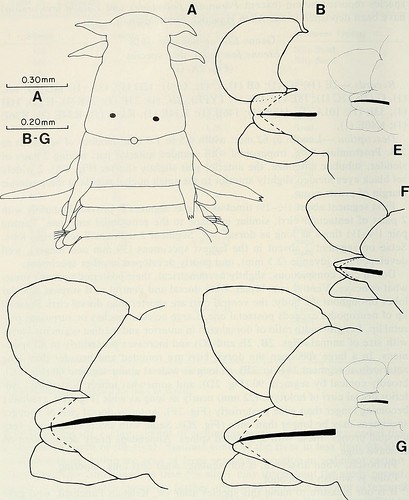
Sadly, I could not locate any living images, but here are diagnostic diagrams of species named for Dr. Fauchald!!

Here for example is Amphisamytha fauchaldi which was a new species of ampharetid (Annelida: Polychaeta) from the hydrothermal vents at Guaymas Basin, Mexico. Over 2000 meter depths! (as one would expect for a hydrothermal vent species). 
Image from page 42 of "Bulletin" (1971-)
Image from page 294 of "Bulletin" (1971-)
Image from page 15 of "Bulletin" (1971-)

and here's actually ONE of a LIVING specimen!! Sphaerodorium fauchaldi!
Image from the Bergen Museum: From their page on the First International Polychaete Day: http://invertebrate.b.uib.no/2015/06/30/the-1st-international-polychaete-day/

Wednesday, July 1, 2015

Five Things you Probably Didn't Know about Polychaetes! #PolychaeteDay

Polychaete worm
This week I celebrate International Polychaete Day which falls on July 1, the birthday of noted polychaete expert Kristian Fauchald, recently of the Smithsonian's NMNH, who passed away in April of this year (2015).


What are polychaete worms? 
Polychaetes are segmented worms, which are distinguished by their leg like structures called parapodia, which each bear distinct bristles (hair-like structures) known as chaetae which are composed of chitin (the material found in arthropod skeletons).
Alitta virens puziko 2
In the traditional sense, polychaetes are usually classified with earthworms and leeches.  But more recent molecular phylogenetic studies have shown that the "Polychaeta" is actually a big messy group that likely includes groups of worms which, at one time might actually have been classified as separate phyla !
This includes spoon worms (echiurans)
Eastern Pacific echiurans or spoon worms
and peanut worms (sipunculans)
Phasocolosoma agassizii, Agassizi's Peanut Worm
How many are there and where do they live? 
Its thought that there are likely over 13,000 species of polychaetes which live in every ocean and at every depth (intertidal to >7000 m abyssal depths) and indeed a small proportion of them (about 168 species) even live in freshwater. The diversity of polychaetes is stunning. Those 13,000 species reside within 80 families!!

As I've shown in photo essays here (by Arthur Anker), they can be STUNNINGLY beautiful!

and some, such as these forms from Antarctica can be quite huge.

Feeding ranges from deposit feeding on sediment, filter feeding to of course, raptorial predation which has been made famous by the Indo-Pacific Bobbit Worm! (Eunice sp. )
Rise of the bobbitworm! (Eunice aphroditois)
So, here's five subjective things about polychaetes for IPD!!!

1.  Eat the Palolo Worm! Out in Guam and the Solomon Islands, there are several island cultures who are privileged to be around swimming polychaetes during their reproductive periods, where they undergo a stage/morphological transformation known as epitoky.
The worms swim up into the water column en masse as seen here..
                            
These worms are then promptly eaten by the locals. There are many accounts of this, such as here on National Geographic Palolo worm is considered quite the delicacy and is apparently very reminiscent of caviar and is served here on toast. A traditional presentation.
From MrLavalava's blog!
2. Polychaetes that glow in the dark! 
                            
What would any group of invertebrates be without at least a FEW members that glow in the dark??? (i.e., emit bioluminescence?)

I actually found two: this one is the "Bahamas Glow Worm" aka Odontosyllis enopla. This species looks like a more conventional polychaete

And then you also have the pelagic (aka swimming) polychaete, Tomopteris! which is a bit more unusual given its habitat (the water column)
Image from Wikipedia! 
3. They have a fossil record dating back to the Cambrian
All of the major invertebrate groups can usually be traced back to the very earliest moments in Earth's history when the first evidence of life appears. Polychaetes are no exception.

This pic shows what is thought to be a Cambrian polychaete from the famous Burgess Shale in Canada. It is  appropriately enough called Canadia spinosa
From the Smithsonian's Paleobiology-Cambrian Page! 
The Royal Ontario Museum has a fairly detailed page on this animal here including some nifty paleo art showing what the animal might have looked like alive..
There were apparently a few of these Cambrian polychaetes, including Burgessochaeta,  Phragmochaeta and others..  These were thought to have paddles and interpreted as having the ability to swim. Length: 2-4 cm, so some tiny beasts. 


4. Many polychaete species live in close relationships with other animals
The most photogenic polychaetes might be large predatory ones or possibly even the colorful Christmas tree worms..but there are many polychaetes with a cryptic lifestyle which includes living as a "guest" on other, larger animals.

Sometimes with strong relationships than had been surmised. I wrote about the scale worm Arctonoe vittata a few years ago.  These worms live within the tube foot groove and along the underside of the leather star, Dermasterias imbricata on the Pacific North West coast. 

In experiments, not only did the worms move to the sea stars when separated, but the seastars moved toward the worms! 
Photo by Paul Norwood-from iNaturalist
Scale worms are very dedicated commensals to their hosts.. As I reported from my time in Japan, these stayed with their host, a solasterid until death...


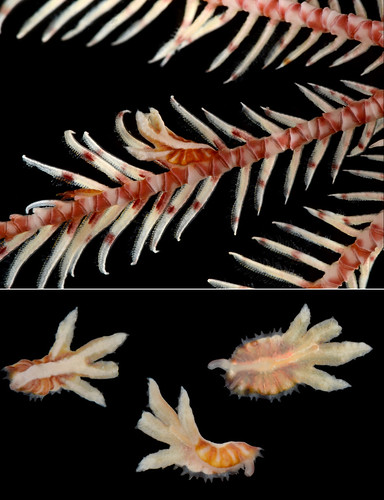
Polychaete worms sometimes have highly specialized relationships. Here are a group of worms known as myzostomes, which are parasites on crinoids. and apparently have been parasitic on crinoids since the Jurassic! (Here
Myzostome 1
5. Many polychaete names are derived from greek mythology: nereids (nymphs) and goddesses!
A comparison of the names of various nereids (sea nymphs or female water spirits) shows that there are in fact a LOT of them shared by a host of polychaete worms..
"Nereid on Ketos" from "Pausilypon" in Naples - beginning 1st century AD - Naples Archaeological Museum - "Augustus and Campania" - Exhibition at Archaeological Museum of Naples, until May 4, 2015
Everything from the genus for the "Bobbit Worm" Eunice sp.
Jack in the box Bobbit Worm
to Nereis which is itself, the Greek word for the water god Nereus
The Worm
Amphitrite, Goddess of the Seas...
Amphitrite
and her terebellid namesake..
DSC_8341
While I'm not privy to the original etymology of these names, its not unusual for the original scientists to name organisms which they perceived as beautiful with namesakes which befitted them...

Happy International Polychaete Day!