Showing posts with label off-topic. Show all posts

Tuesday, April 12, 2016

Ribbon Worms: The Incredible Predators You've Barely Heard About!

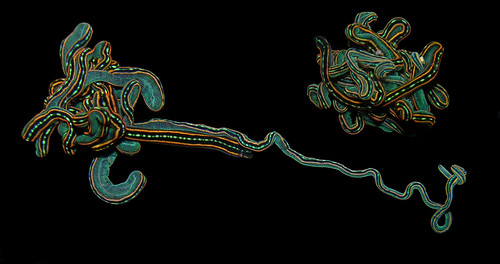
Colourful nemertean worm - Monostilifera gen sp ? (new species)

This week: Some cool examples of predation by a predator, you've probably NEVER heard of! And yet, they are deadly, efficient and can take down prey or food that is MANY times their body size.

I am of course talking about the Nemertea aka the Ribbon worms (or sometimes the proboscis worms)! This is actually a whole PHYLUM of worms, which in spite of their superficial appearance, are actually VERY different from flatworms and have a very significant number of internal features..

There's somewhere in the neighborhood of 1300 species of ribbon worms. Most are flattened and can be VERY elongate with some (e.g., Lineus longissimus) approaching 60 METERS (nearly 200 feet) long! Most occur in the oceans but there are freshwater and terrestrial species as we'll see.

Here's a nice summary of info from the Smithsonian magazine. 

Relevant to today's post is that many nemertean worms are PREDATORY.

They capture food using an eversible proboscis which, thanks to the internet's fascination with weird, gross stuff, you have undoubtedly seen in a variety of formats. Here's two of the popular ones: the red Thailand species expelling its bizarre, almost fractal proboscis:
This proboscis is one of the primary defining characteristics of this group.

and of course this green one from Taiwan!

According to an interview with Dr. Jon Norenburg in the Invertebrate Zoology Department of the NMNH, the proboscis of nemerteans is ejected from a body cavity and used to capture prey. Often times, they can capture prey that is THREE TO FOUR TIMES larger than their body!!

Here's the thing though, the above two video/gifs? Showed these animals in stressed situations outside of their natural environment. And NOT demonstrating their mastery of their predatory proboscis appeasing their ravenous rhyncocoel!

These animals likely represent a HUGE ecological impact which is probably difficult to study owing to their rather cryptic nature.

Here today is a nice little collection of ribbon worms "strutting their stuff" with some GREAT images showing attacking/devouring prey (thanks to YouTube and Flickr!)

Some ribbon worms such as these huge Antarctic ribbon worms (Parborlasia corrugatus) are both scavengers AND predators and have been reported as feeding on nearly ANYTHING:  fecal pellets, starfish, dead seal meat, fish, sponges, sea anemones, worms amphipods, penguin meat AND sardine meat with tomato sauce! and on and on....
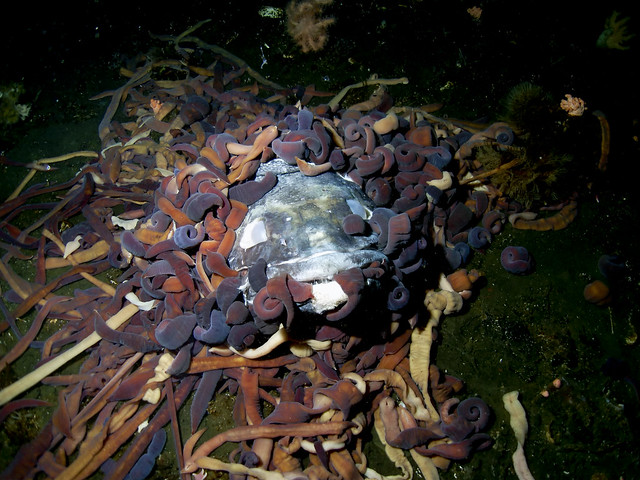
Worms dining on a fish head

5. POLYCHAETE WORMS! Polychaete worms of various types appear to be a popular food among ribbon worms.

Here's one image by James Zhan showing a large ribbon worm consuming a "paddle worm"
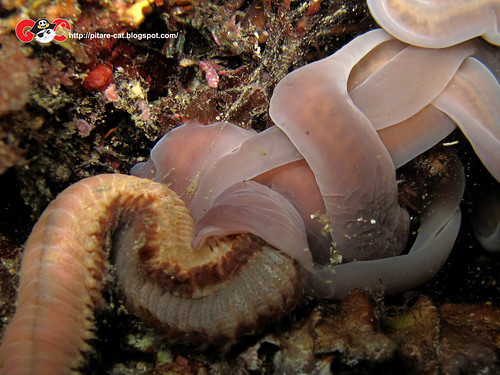
Nemertina- Cerebratulus

This one is impressive. You can actually watch the proboscis IN ACTION as its used to attack its polychaete prey!


Here's another showing feeding on dead but still, LARGER polychaete worm food..

Here are pics AND video from Florida of the ribbon worm Tubulanus feeding on a feather duster worms (a filter feeding polychaete).  Here's a nice shot showing it attacking the "head"
Image from Wetpixel, photo by lindai http://wetpixel.com/forums/index.php?showtopic=51604
And a separate video showing another interaction with the same two players! 

4. CRUSTACEANS!! 
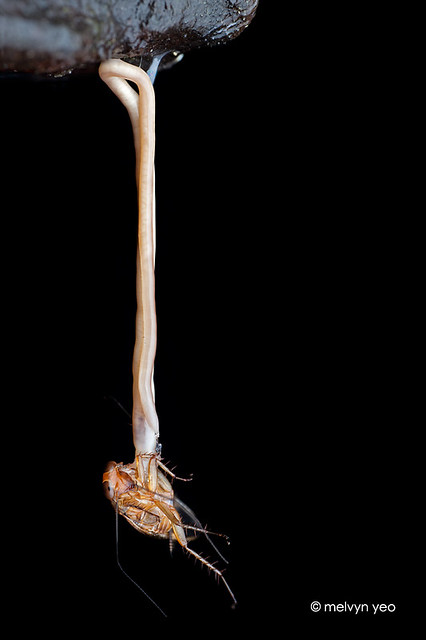
From two different sources. Marvyn Yeo shows us this ribbon worm seemingly coming up behind a tiny crab..
Marine ribbon worm IMG_3544-2
And this video shows us a ribbon worm feeding on this amphipod!

and even mysid "shrimp"!

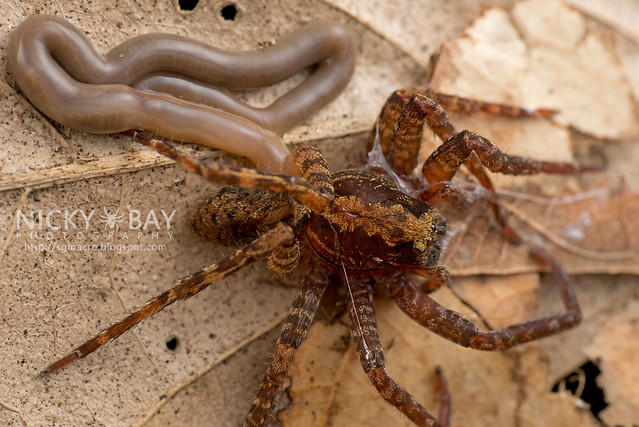
3. INSECTS and land arthropods
Most ribbon worms live in the ocean, but a sparing few have gotten into freshwater and even terrestrial habitats! And yes.. with those same predatory habits!

I'll be honest though, some of these can be pretty difficult to ID even to phylum. these were identified as ribbon worms but I suppose they could easily be flatworms. 
IMG_4107 copy
IMG_4957
Ribbon Worm (Nemertea) devouring Wandering Spider (Ctenidae) - DSC_2510
IMG_1222
IMG_1200

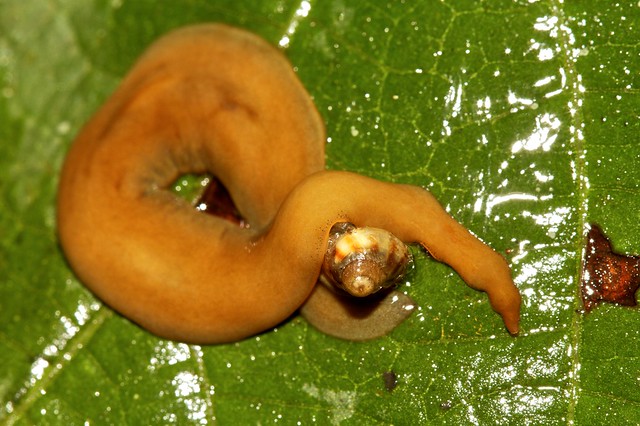
2. Snails! Flickr users Marvyn Yeo and "Paul" brings us stunning pictures from Asia and Ecuador showing this ribbon worm attacking this snail! Apparently by working its way into the shell aperature and attacking the animal in its own shell.
IMG_1902 copy
nemertean worm with prey

1. FISH!! and finally the pièce de ré·sis·tance! To be sure, I'm don't think that these worms actually captured these fish, BUT they are very clearly DEVOURING THEM.

Many ribbon worms have a stylet or thorn which is thought to deliver a toxin against some prey items.. so is it entirely unreasonable to suggest they capture fish, esp. prey much larger than them? Probably not. 

This one is from the Falkland Islands/Malvinas..
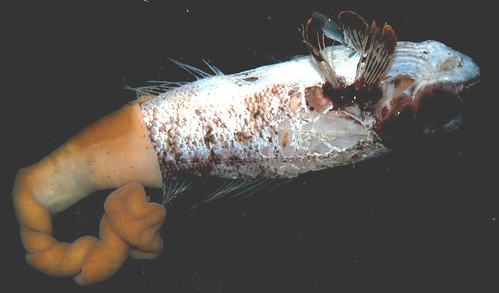
Falkland Islands-18-019-Nemertean eating fish-Credit David Barnes

Here is another GREAT feeding observation in VIDEO with a professional commentary by ribbon worm expert Dr. Jon Norenburg at the No Bones blog! here  This one shows a ribbon worm devouring a HUGE fish from a reef in the Cayman Islands.

But good grief: LOOK AT THAT! Amazing. 


And of course leave it to the folks at Tokyo Sea Life Park to capture this AWESOME video of Parborlasia corrugatus An Antarctic ribbon worm devouring this mackeral in time lapse! (Although Parborlasia is pretty big relative to that fish-its still impressive to watch)

LOVECRAFTIAN FOOTNOTE
So, I am enough of an old Lovecraft/Cthulu "unnaturalist" to recognize the similarities between aforementioned nemerteans and Lovecraft's famous wormy Dholes! Images shown here from Fig. 8 (Petersen et al. 1988- Petersens' Field Guide to Cthulhu Monsters) on the left and on the right from YogBlogsoth.

The proboscis is close..but I'm thinking.. polychaete instead (dholes do seem to be segmented worms after all)? But that only suggests that if dholes are derived polychaetes than a giant Cthuloid Ribbon Worm may yet be lurking in the darkness....
fr http://yog-blogsoth.blogspot.com/2012/06/dholedoelbhole.html


Wednesday, January 13, 2016

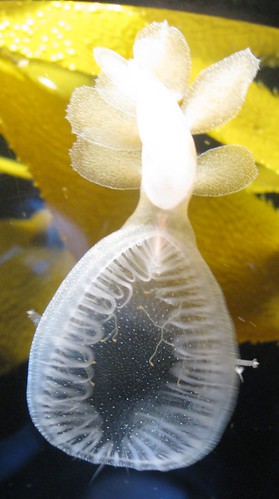
LyrocteisThe Imperial Harp Shaped Comb Jelly!

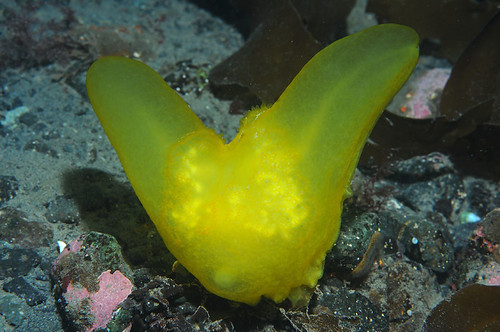
Picture by Robert F. Bolland from the Okinawa Slug site
Happy 2016! And a fine one it has been so far! I'm on my annual holiday travel to San Francisco visiting friends, family and my colleagues at the California Academy of Sciences..

During this visit, Curator Bart Shepherd, a colleague of many years from our days at Steinhart Aquarium indulged me in showing off this recent collection from the Academy's scientific expedition to the Philippines: the benthic ctenophore Lyrocteis! Possibly Lyrocteis imperatoris..
These are inspiring animals. They're not only big (about four to 6 inches tall) but they are also WEIRD things that nobody (other than scientists) ever gets to see, but now? thanks to social media and some excellent aquarium science.... these mysterious animals may actually get some time in the sun!  This aquarium in Japan has actually be able to breed them

But WHAT ARE THEY??
I have described and mentioned benthic or "bottom" ctenophores (= comb jellies) before (and recently! see here).

Long story short: Most comb jellies are midwater (=pelagic) swimming gelatinous animals... but SOME of them are unusual in that they have adapted to living on the sea bottom.. Some live on sea stars, while others on coral. 

Today I thought I'd just focus on this one genus: Lyrocteis the only member of the family Lyrocteidae. Lyrocteis includes two species, one from the Antarctic and one from the tropical Pacific.
The name apparently refers to its resemblance to a Lyre. (think of the root word of "lyric" which means "of or for the lyre") Neat, eh?  and "cteis" which refers to the comb rows present in all "comb jellies"
1004182

There's not a lot known about them. They feed (see below) in a manner similar to the swimming species using long tentacles to capture food. When described in 1941 (here), they were labelled as "sessile" but the Antarctic species was described as being able to move 1 to 2 meters per day (here to see)

Here's an individual identified as the Antarctic species: Lyrocteis flavopallidus
                    Ctenóforo
2.... and the other one?
and there's a second species known from throughout the tropical Pacific called Lyrocteis imperatoris, described in 1941 by Professor Taku Komai at Kyoto Imperial University to honor Emperor Showa of Japan. The original specimen was apparently collected from Sagami Bay by the Biological Laboratory of the Imperial Palace. He described it as a "strange marine animal.."

This species is described mainly from the tropical Pacific. Possibly the Indian Ocean I suppose (based on the ones below) but none are known from the Atlantic.  Most of these live in relatively deep-water, at the lower edge of SCUBA depth to significant depths in the deep-sea (>500 m).

Its name in Japanese: 
kotokurage コトクラゲ

Here's the species we saw in the Hawaiian Islands during the Okeanos Explorer cruises in September. In theory.. there are only two species.. the Antarctic one and the tropical Pacific species.
So, this is possibly Lyrocteis imperatoris.. but exact details remain elusive.  A great MANY different color variations have been observed in observed specimens of Lyrocteis.. This makes biologists wonder if they are seeing multiple species??? Or perhaps one species with a lot of color variation??Dr. Komai, the scientist who described this species noted a great variation in color when originally collected.

Its possible (and even likely) that there is more diversity (i.e., more species) but the animals don't make it easy to study them.

Why? Because they aren't seen frequently and when they do, collecting is difficult. The individuals
aren't easy to sample and for whatever reasons, the body of these animals is extremely difficult to preserve..so intact specimens aren't generally available to study...

Here were some spectacular red ones from Okinawa..
Bart Shepherd & the California Academy of Sciences Expedition to the Philippines encountered THREE color forms... the speckled one above and two others: a purple/red one and a yellow one...

and here's a South African species in the Indian Ocean. Another color and puffier..

Feeding! 
One of the nice things about our modern age is that video and image observations have become easy and of high quality

If you have Facebook, here's a feeding video of the Lyrocteis collected by Steinhart Aquarium from the Philippines..

Here's one of the purple south African species observed via video with its feeding tentacles extended...


Here's a nice one of a Japanese species with tentacles extended... from SHINKAYABLOG which translates to "deepsea" blog  This is basically similar to the way that swimming comb jellies feed...
This also explains the kawaii (cartoon mascot) for Lyrocteis imperatoris!   Note the feeding tetnacles catching the fish!!
from @deepsealife https://twitter.com/deepsealife/status/605369053209755648

Amazingly, someone is SO fond of these that they have made tiny magnets out of them!
3. The Story About its original discovery!!?
Dr. Komai, in his 1941 description of this species recounts an interesting story about "when" this species was discovered. Because apparently, although he described it in 1941.. he was NOT the first one to have encountered it!!
What makes the story of the discovery of this remarkable ctenophore more interesting is the fact that another specimen of evidently this form had been obtained previously from the same Sagami Bay and recorded by a Japanese zoologist, but without any idea of its real nature....
...in August, 1896, we find a short note in Japanese by T. N. (obviously Tokichi Nishikawa, the inventor of the famous cultured pearl) entitled " A curious animal" with rather good illustrations, one of which is reproduced in Fig. 3. The accounts and figures clearly show that the 'curious animal' was no other than a specimen of the present platyctenid.
Nobody who saw it at that time could tell what it was. The real nature of this form thus remained enigmatic only to be made clear forty-five years later."
..and don't worry, I haven't given up echinoderms! But travelling makes you appreciate opportunistic topics!! 

Thursday, October 29, 2015

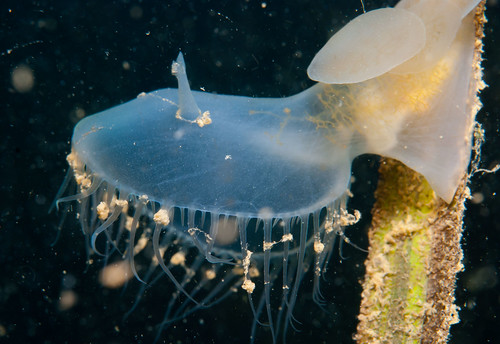
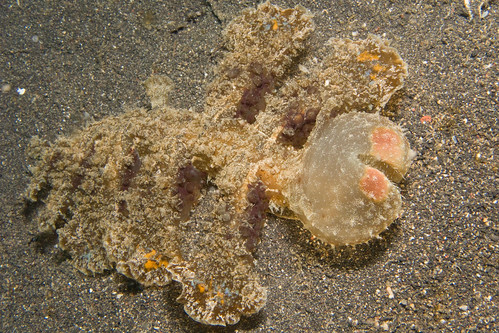
Melibe Ghostly Nudibranchs for Halloween! Happy #SeaSlugDay 2015

Image photographed by Martin Buschenreithner. Borrowed from the US Slug Site! 
NUDIBRANCHS! Happy First Sea Slug Day!!

Given its proximity to Halloween and my propensity for sharing cool stuff about weird animals my post this week is about one of my favorite bizarre sea slugs: The ones in the genus Melibe!

Melibe (in the family Tethyiidae) includes 17 currently recognized species which are known Primarily from the tropical and temperate Pacific but with a minority of species from the Atlantic, including South Africa and the tropical west Atlantic (Bahamas, Florida, etc.)

Personal caveat: I am not an expert in nudibranchs and have gone with names used by the photographers. If you know better let me know and I will correct them.

Here's a "classic" Melibe leonina from the California coast to give you an idea of what the general body plan looks like...

This species is fairly well known. With nice brief write up by Monterey Bay Aquarium but many others as well. 
Melibe sea slug
When encountered, some species are often present in great abundance..

Although they appear to be mostly filter feeding in the pictures
Hooded Nudibranch
 some Melibe species can also be fairly effective predators.. here's a nice video from Japan showing prey capture..

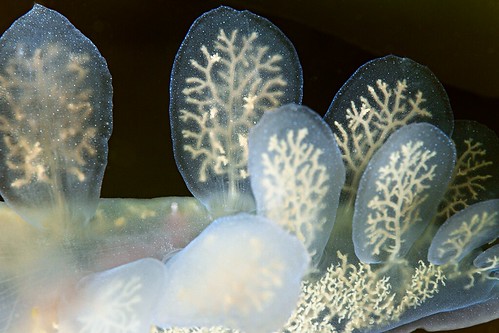
Morphology on these animals is remarkable in that their body can be translucent to transparent and the internal anatomy can be visible just like those old "Visible Man" model kits!

A close up on the lobes on the body reveals these fine branching structures-the digestive glands! Which function in digestion of food
nudi branchia 1417

What happens when you take these digestive glands to the extreme? Along with a transparent body?
You get Melibe colemani, aka the "Phantom Melibe!" named for the photographer Neville Coleman, who was a noteworthy photographer, diver and natural historian from Australia.

What you are seeing in the picture below is its digestive glands!! The body is completely transparent!! This species was originally described from Malaysia. These images are from Lembeh (Indonesia) and other images have been identified from the Philippines, so I would imagine it occurs in roughly that tropical, central Pacific region. 

Nudibranch (Melibe Colemani)
I know just looking at pictures doesn't look like its a sea slug, but check out this video!!
              
They SWIM!!
  Most of the species seem to crawl around or stay in one place, but given the motivation, some species can swim.. Here's what I think is Melibe viridis, based on this article in the Sea Slug Forum but kind of swimming in the water column..(identified as Melibe japonica, since synonymized)

Melibe diversity is fairly mind boggling.

This one from Lembeh, Indonesia. This one is also identified as Melibe viridis, but which seems to vary somewhat from the one from Japan. These can get quite large with some individuals reaching almost a foot long!

There's a nice write up on Melibe viridis here on the Slug Site. Here.
Lembeh_Melibe sp
Ugly Nudibranch
Ugly Nudibranch
Seeing this one alive is almost a necessity!

Melibe engeli from the Philippines
Melibe engeli
Melibe pilosa from the Philippines
Melibe pilosa.JPG
Melibe digitata from the Philippines
Melibe digitata

Wednesday, July 22, 2015

Polychaete JAWS! (and proboscides) for #wormwednesday


Following International Polychaete Day (July 1, here),  I found there was quite a bit of neat stuff worth sharing, which led to more and some more.. and so a second polychaete post in July! woo!

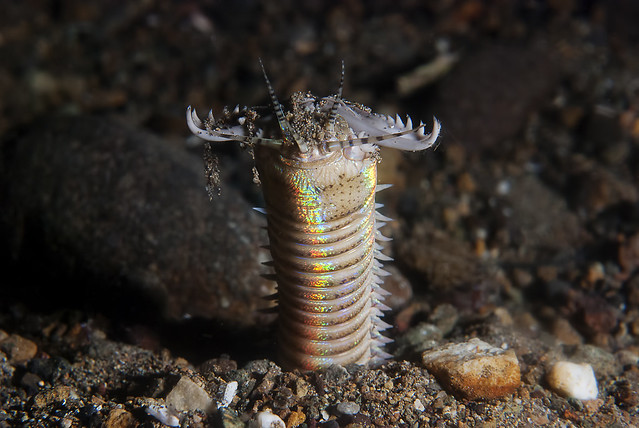
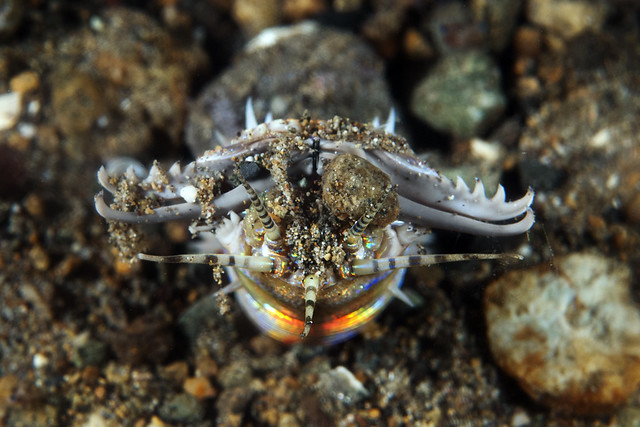
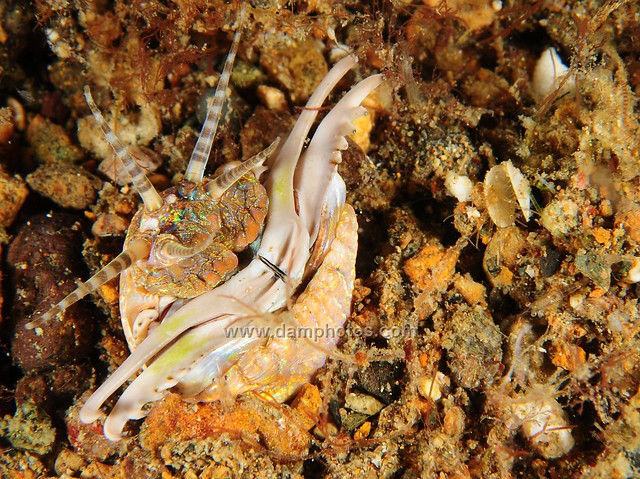
So, many of the polychaete worms have some pretty impressive jaws! Many are raptorial predators such as everyone's favorite eunicid-the Bobbit worm But many are just as easily omnivores or scavengers. 
Rise of the bobbitworm! (Eunice aphroditois)
Honestly, I'm not sure which species are known for specific habits. As we'll see even having an eversible pharynx does not seem to be immediately associated with predation. Although the "fast strike"/raptorial approach seems likely.. 

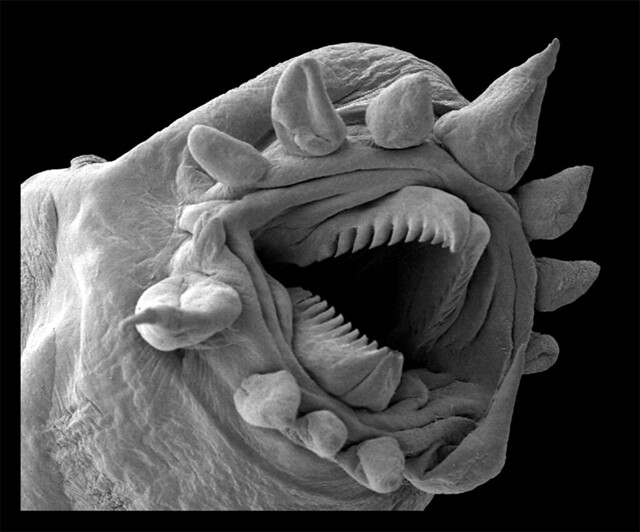
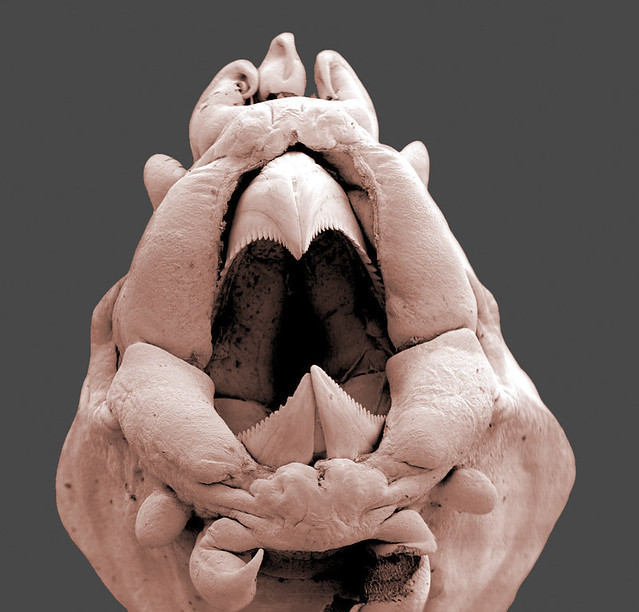
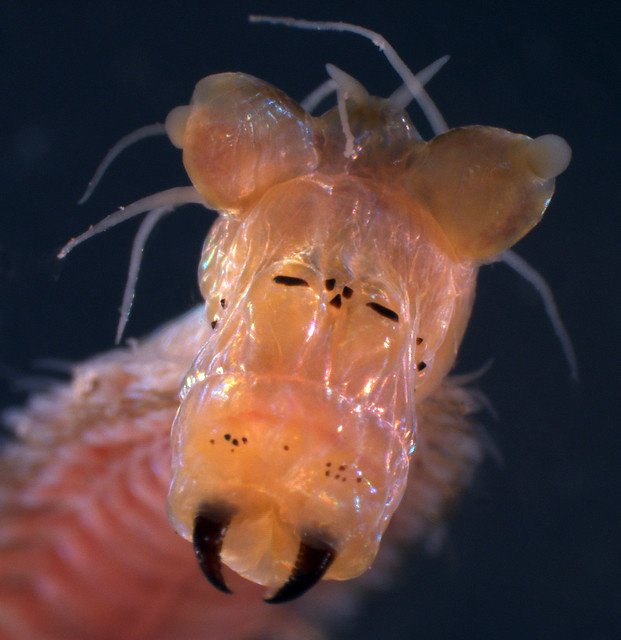
Here's a nice one with 4 jaws! Pharynx of Lepidonotus squamatus, which is a scale worm (Family Polynoidae)
It can beat you!
Here is an SEM of another scale worm, but from a hydrothermal vent habitat..
Hydrothermal worm
Not sure which kind of polychaete this is from, but I'm going to guess that its from something similar to the above scale worms..
I'm hungry!!!

And of course, the giant Antarctic Eulagisca gigantea, which I briefly featured here. Honestly, I'm not sure its positively known whether this is predatory or not, but it sure does seem to be...

So, here: let's look at some other polychaete worms that seem to have the apparatus for predation!The eversible pharynx for example, seems to be used for grabbing hapless worm food! Lets take a look at a nice video of one in this green paddleworm,  Phyllodoce lamelligera

Here's a pretty incredible video showing the green worm with an INCREDIBLY extended proboscis trying to devour the red polychaete next to it.. Yow.


These two both identify the subjects as Glycera, which I'm not 100% sure of, but it does look like they both show off that impressive polychaete proboscis!


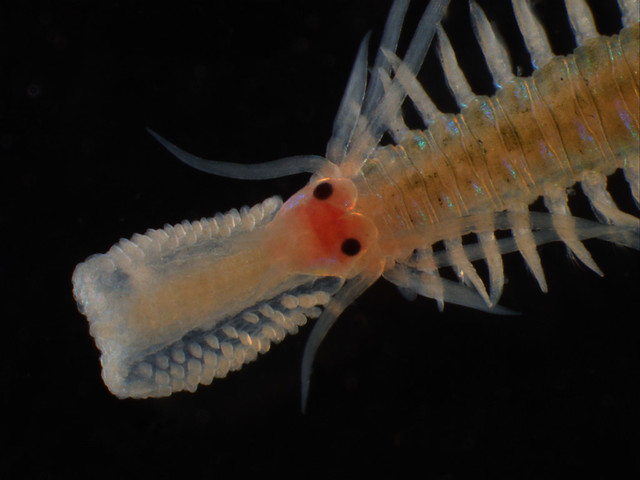
Here is the extended proboscis of a swimming (pelagic) alciopid worm, which uses its proboscis in the same fashion, to catch itself some dinner...
Vanadis

Here is a nice phyllodocid worm with its proboscis extended..
The little monster
And here's a very formidible looking one from Nephtys sp. 
Dangerous
Another extended proboscis in a nereid worm from French Polynesia..
Jaws
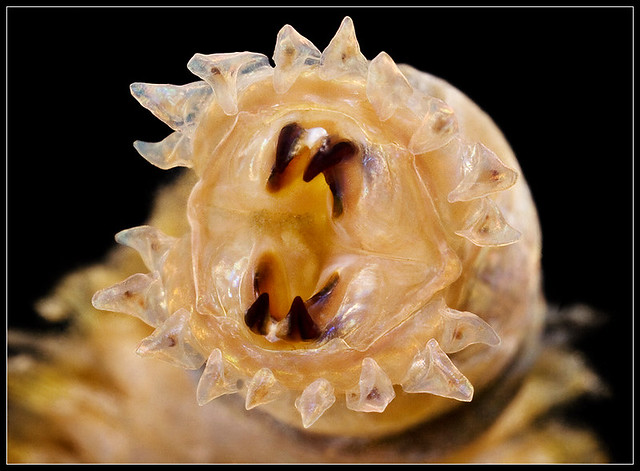
and of course.. the Bobbit worm, Eunice sp. with its big spring loaded jaws!!  Some of these Bobbit Worm macro shots are so tight, its practically like one staring you in the face!

By now, I'm sure EVERYONE has seen Bobbit Worm predation. But if not, and you want to learn more about Bobbit worm taxonomy, Go here
Face to face (Eunice aphroditois)

Bobbit Worm
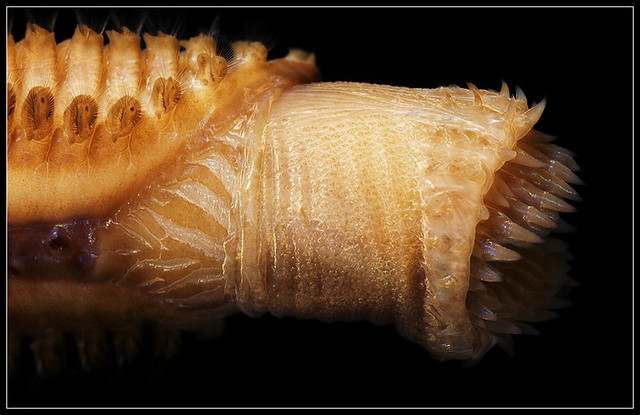
ON the other hand, here is an eversible proboscis in a lugworm, Arenicola proboscis, which is a deposit feeder


and to cover the full gamut, this video shows the proboscis in what looks to be some scavenging. I do not vouch for the identifications..